Can Ethereum succeed without Ether (ETH)?

Ethereum (ETH)
Published on
In this new edition of Alpha Recap, we look back at the week's top insights in the crypto market: major news, yield or airdrop strategies, key information, and quick analyses to go beyond the noise.
Alpha Recap aims to present you with the most important Crypto Market Alphas of the week. Every Friday, we offer a condensed version of the most valuable information from our Alpha Feed.
Reserved for OAK Premium members, the Alpha Feed aggregates insights, yield and airdrop strategies, as well as key market information. In other words, the core DNA of OAK Research: providing filtered content that goes beyond market noise.
Robinhood has announced the testnet launch of its native Layer 2, the "Robinhood Chain," with the ambition of creating a dedicated space for tokenized assets and progressively moving its infrastructure to an on-chain environment.
The Robinhood Chain is designed to host RWAs, tokenized stocks, and ETFs, as well as assets like real estate or art, by intelligently integrating them into DeFi, notably through lending opportunities to exploit their full potential.
Technically, the network is built on Arbitrum via the Nitro stack, a choice that maintains the composability and liquidity of the EVM ecosystem while leveraging the security of rollups. In this regard, this approach differs from that of Coinbase and Kraken, which instead prioritized the OP Stack for their own Layer 2s.
By internalizing the wallet, infrastructure, and distribution, Robinhood offers a cohesive experience: DeFi users can access tokenized stocks in a familiar environment, while retail clients benefit from an abstracted interface that hides blockchain complexity.
→ We have outlined several ways to interact with the Robinhood Chain right now in the Alpha Feed
It is now possible to deposit tokenized stocks and ETFs as collateral on Euler to borrow PYUSD, the stablecoin issued by PayPal.
The novelty lies less in the access to credit than in the nature of the accepted collateral. Indeed, Ondo is introducing a completely new primitive within the EVM ecosystem by making tokenized securities eligible for on-chain lending logic.
Three assets are compatible with this market at this stage: TSLAon, QQQon, and SPYon, all issued by Ondo. On the technical side, the integration of Chainlink Data Feeds ensures pricing reliability, while Sentora manages the risk.
Beyond the immediate use case, the interest lies in the ability to add a real layer of composability to assets previously held in a primarily passive logic.
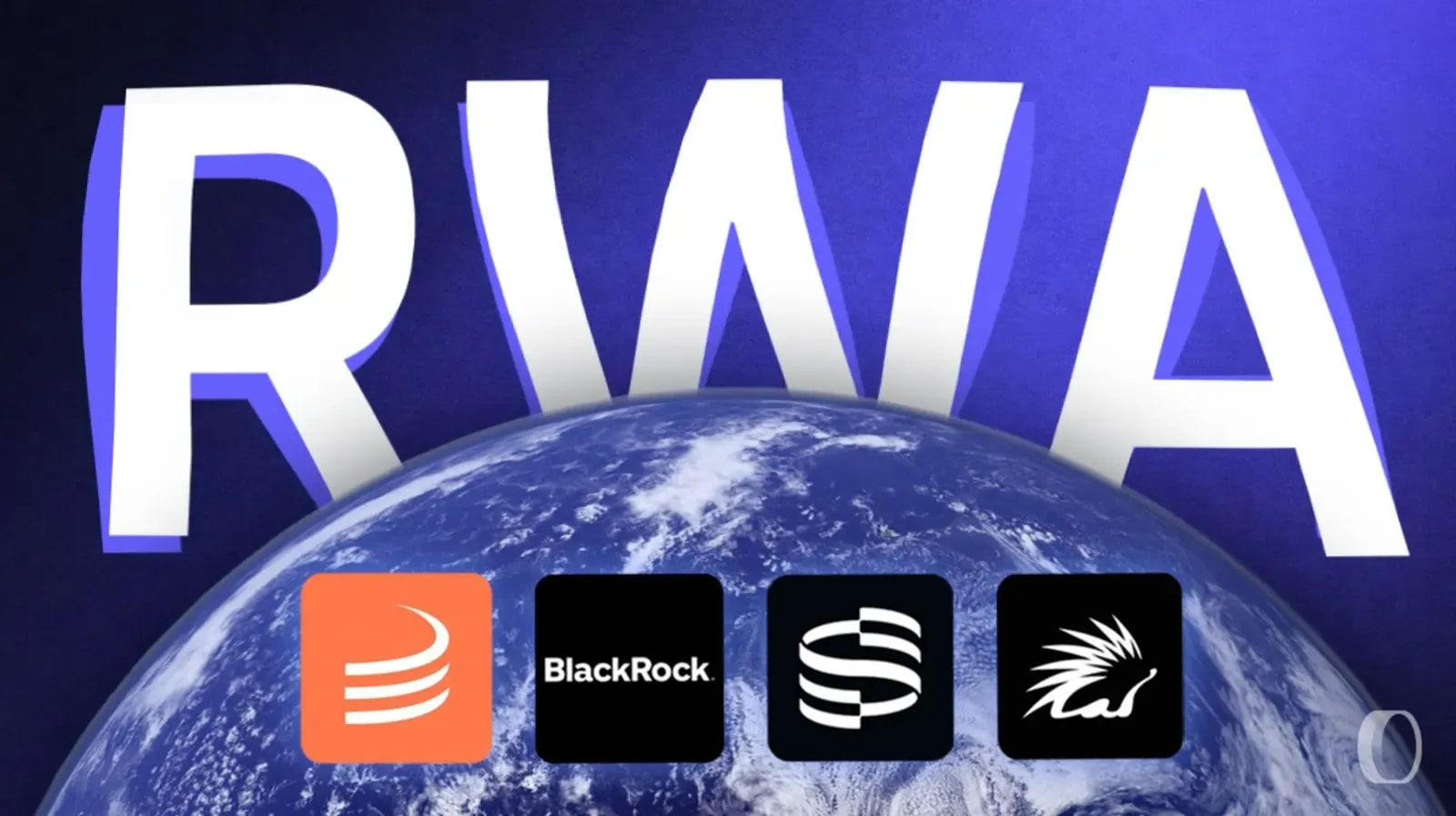
By facilitating borrowing and capital circulation around these instruments, protocols like Euler help structure the depth and economic utility of the RWA segment. This is an absolutely essential aspect of the democratization of tokenized assets that we developed in more detail in our latest article on the RWA stack:
Announced last year, suiUSDe, developed by Sui in collaboration with Ethena, is now available on mainnet. This synthetic stablecoin is already integrated into the main protocols of the Sui ecosystem, such as Bluefin, Cetus, or Navi, and fits directly into DeepBook Margin, offering the possibility to trade with leverage using DeepBook's shared liquidity.
To support the launch of suiUSDe, a vault has been deployed on Bluefin by Amber Group, currently showing a 10% yield, and seeded with $10 million by SUI Group, the DAT dedicated to SUI accumulation listed on Nasdaq.
As a reminder, suiUSDe is fully collateralized by Ethena's USDe, allowing Sui to have a native stablecoin whose composability is entirely manageable within its ecosystem, while capturing the yields generated by USDe. In accordance with Ethena's Whitelabel model, these flows are internalized and then reallocated, in this case, to SUI token buybacks.
Sui also plans to launch USDi soon, another stablecoin from the Whitelabel solution, but this time collateralized by USDtb, Ethena's stablecoin exposed to BlackRock's BUIDL fund. For information, after Jupiter and its jupUSD, Sui becomes the second integration of the Whitelabel solution outside the EVM ecosystem.
→ (Re)read our full presentation of Ethena's Whitelabel solution:
To benefit from exclusive Alphas, as well as our Watchlist, the OAK Index, paid reports, or daily recaps, join us on OAK Premium.