
Should You Put Your Crypto in "Bunker" Mode, as Justin Drake Recommends?


Bitcoin (BTC), Ethereum (ETH)
Published on
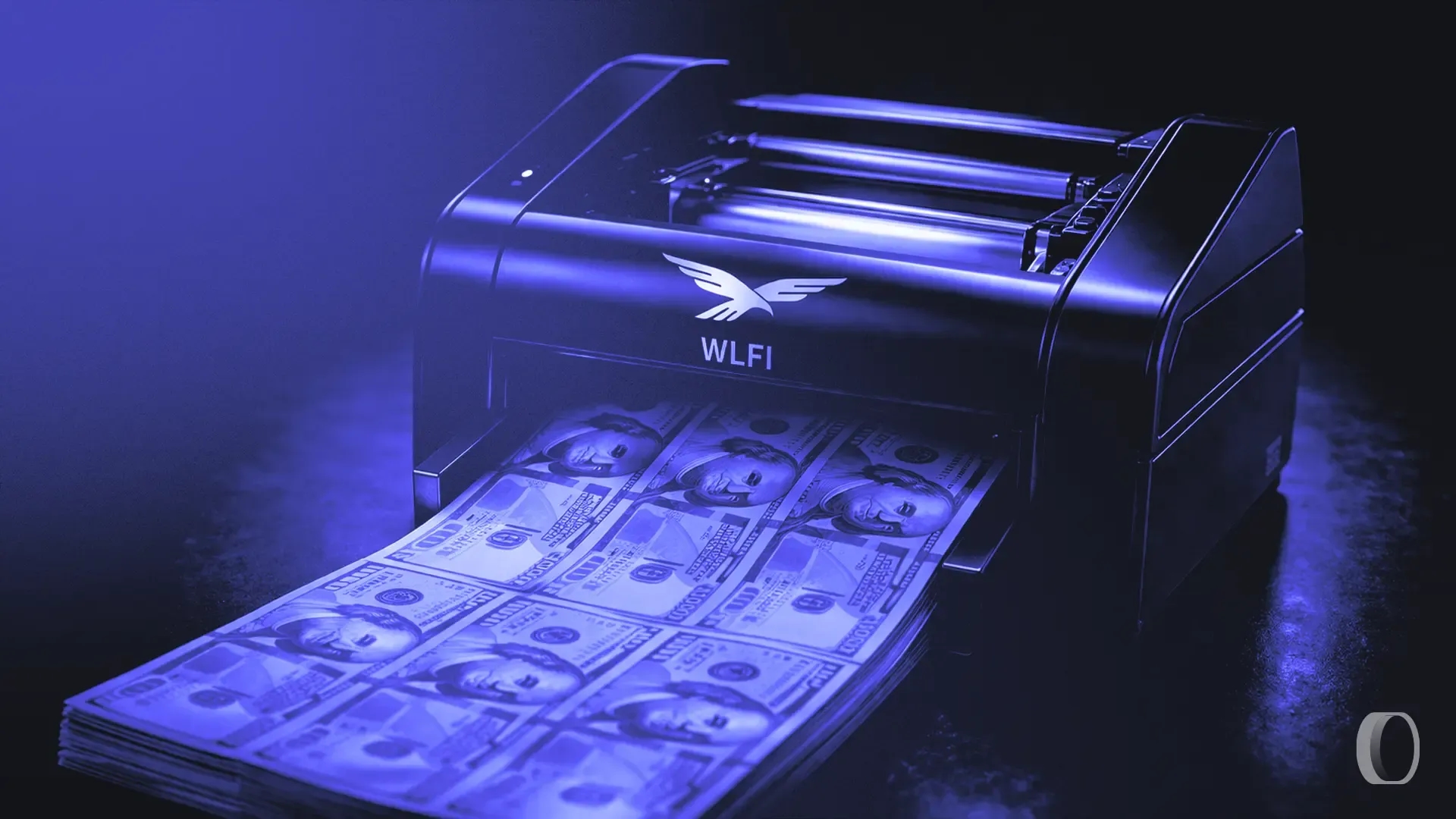
World Liberty Financial, the Trump family’s crypto project, is now at the center of a controversy after using its own token as collateral to borrow tens of millions of dollars in USDC that it may never be able to repay. Here is our analysis of what appears to be a standard operation at first glance, but ultimately reveals a new “crime” from the Trump camp.
World Liberty Financial is presented as a decentralized finance protocol governed by a DAO, with the goal of strengthening the U.S. dollar and offering alternatives to the traditional financial system. In reality, the project more closely resembles a centralized structure controlled by the Trump family and its close circle, with an economic model that diverges significantly from on-chain finance standards.
The project revolves around two main products: the WLFI token, whose presale generated $550 million in commitments from tens of thousands of investors, and the USD1 stablecoin, whose market capitalization quickly reached several billion dollars.
Behind a political narrative centered on financial sovereignty and opposition to the traditional banking system, the actual governance of the protocol remains highly concentrated. The Trump family controls roughly 60% of the entity. On top of that, it captures 75% of the revenue from WLFI sales and 100% of the revenue generated by USD1.
This should not come as a surprise. World Liberty Financial is far closer to a private entity using the codes of DeFi than to a truly decentralized project. More importantly, it fits into a broader strategy by the Trump family to monetize the pro-crypto image built during the U.S. elections.
A detailed analysis of events through Arkham and Etherscan reveals a timeline that begins on February 8, 2026, when the World Liberty Financial treasury deposited $14 million in USD1 as collateral on Dolomite, allowing it to borrow around $11 million in USDC.
A few minutes later, $11.45 million in USDC was sent to a Coinbase Prime deposit address. Two days later, on February 10, $12.5 million in USD1 was transferred directly from the World Liberty Financial treasury to a new Coinbase Prime address, without going through Dolomite.
It was only two weeks later that the WLFI token came into play. On February 20, 2026, the treasury deposited 890 million WLFI on Dolomite and borrowed $20 million in USD1 against this collateral. On March 24, an additional 1.1 billion WLFI was deposited. In total, 1.99 billion WLFI tokens were locked on Dolomite, backing approximately $31.4 million in borrowed stablecoins across these two operations.
Activity continued on April 2, with a transfer of 2 billion WLFI from the treasury to a Gnosis Safe proxy wallet. On April 7, another 1 billion WLFI was sent to the same address. At current prices, this represents roughly $266 million.
It is worth noting that many analysts, such as Arkham, argue that these amounts may also have been deposited on Dolomite through additional addresses, although on-chain data cannot confirm this with certainty.
Nevertheless, the broader activity remains problematic, as World Liberty Financial is using WLFI as collateral on a relatively obscure lending protocol to borrow millions of dollars in USDC, despite the token’s extremely limited secondary market liquidity relative to its valuation.
The first point of concern directly involves Dolomite and the USD1 pool. The protocol interface data shows that $189.6 million in USD1 has been deposited for $167.8 million borrowed, resulting in a utilization rate of 88%. At this level, available liquidity is extremely limited.
This means that not all depositors can exit simultaneously, as a large portion of funds is locked in WLFI’s position. Around $160 million of the $189.6 million in deposited USD1 belongs to World Liberty Financial, representing over 80% of both TVL and borrow activity. This creates a complete dependency on a single actor.
As long as World Liberty Financial does not repay its debt, users cannot withdraw their capital under normal conditions. The yield displayed by the protocol, around 11% APY on USD1, does not reflect a healthy lending market and may instead incentivize users to deposit despite a high risk of being unable to exit.
The second issue is the nature of the collateral. WLFI is valued in the billions, yet its actual liquidity is close to nonexistent. On major markets, just a few hundred thousand dollars of sell pressure would be enough to significantly impact the price. Liquidating a position worth hundreds of millions of dollars is therefore practically impossible without collapsing the market.
What this implies is that the position threatens Dolomite’s solvency. If WLFI were to drop significantly and the team fails, intentionally or not, to maintain a positive health factor, Dolomite would be unable to properly liquidate the collateral to cover the debt.
The result would be the creation of bad debt, ultimately absorbed by other depositors. This is the core risk highlighted by observers: the possibility that the WLFI team deliberately created this position to extract USDC using a token that is theoretically capitalized but has little real market value.
Another complicating factor is the structure of the position itself. A portion of the borrowed funds appears to be reused as collateral in other positions, creating a form of internal leverage loop. In other words, liquidity is circulating within the same entity.
Finally, the broader context reinforces these concerns. Dolomite is not a neutral platform in this situation: Corey Caplan, the protocol’s founder, is also the CTO of World Liberty Financial. In other words, World Liberty Financial is borrowing heavily from an infrastructure with which it already has close ties, raising serious questions about neutrality and risk management.
Note: it is strongly discouraged to deposit USDC into this pool or on Dolomite.
In response to growing criticism, World Liberty Financial published a statement attempting to explain the situation. The team rejected the accusations, portraying them as inaccurate or misleading.
The first argument is the absence of liquidation risk. According to them, liquidation is not a concern because the position is heavily overcollateralized and can be reinforced at any time by adding more WLFI. This argument is clearly insufficient.
As with any DeFi user, the WLFI team can manage its position to maintain a positive health factor and avoid liquidation. However, the issue is not the amount of collateral, but its quality. Adding more WLFI does nothing if the token cannot be liquidated under normal market conditions.
The second argument relies on the concept of an “anchor borrower.” World Liberty Financial claims that its position generates yield for users by attracting liquidity through high rates. Under this logic, the concentration of borrowing is not a problem but rather a benefit for users seeking attractive returns.
Once again, the response is misleading. As explained earlier, the yields observed do not reflect a balanced lending market, but rather a situation where a single actor absorbs nearly all available liquidity. The 11% to 16% APY on USD1 and USDC is simply a risk premium paid by users in exchange for this exposure.
In a context where many on-chain finance protocols have exhibited malicious behavior in recent months, user trust in project teams is already low. Combined with the widespread perception of Donald Trump and his family as opportunistic actors seeking to extract maximum value from the ecosystem, this supposedly “altruistic” behavior aimed at offering attractive yields is difficult to believe.
At the same time, World Liberty Financial highlights its financial strength, with an annual run rate of $159.5 million for USD1 and more than $65 million in WLFI buybacks. These elements are used to support the idea that the project is healthy and capable of sustaining its position. However, they do not address the core issues of collateral quality, solvency, and liquidation capacity.
Finally, the team mentions technical improvements to USD1 and a future governance proposal to unlock tokens for early investors. Once again, this appears to be an attempt to shift the narrative away from the core issue.
For context, the project raised $550 million from over 180,000 investors throughout 2024. The WLFI token launched in September 2025, with around 30% of supply in circulation at a $6 billion valuation. Today, the market cap has dropped significantly and is estimated at around $2.5 billion. Meanwhile, nearly 80% of the supply remains locked, meaning the current price has never truly been tested under significant selling pressure.
The issue is that circulating WLFI tokens have only been distributed to the project team, while private investors have yet to receive any allocation, and no official communication had mentioned an unlock schedule prior to this clarification. The upcoming release of these tokens could significantly destabilize the current structure.
When someone as controversial as Justin Sun publicly criticizes your project, it usually means there is something wrong. Late last week, the Tron founder spoke out, accusing World Liberty Financial of manipulation and denouncing its practices.
Among the claims raised by Justin Sun, the most concerning is the allegation that the WLFI smart contract includes a backdoor allowing the team to freeze user funds unilaterally. This feature was reportedly never disclosed to investors during fundraising, raising serious concerns about transparency.
In a second statement, he claimed that a single address has the power to blacklist wallets, while a 3/5 multisig controls critical protocol actions. In practice, this means that a very small number of actors could exercise full control over the infrastructure, even though such setups are not uncommon in the ecosystem.
World Liberty Financial denied these accusations, pointing instead to Justin Sun’s reputation and stating that his wallets had been frozen due to a breach of contractual obligations. Some accounts suggest he attempted to bypass vesting conditions to sell tokens to users of his own platform, HTX, which would justify the decision.
At this stage, it is impossible to determine which version is correct, as no public evidence confirms either claim. However, one point remains undeniable: the team holds technical control that allows it to directly intervene on user funds. Even if such mechanisms can be justified in certain cases, they stand in direct contradiction with the project’s decentralization narrative.
The fact that these accusations come from Justin Sun himself adds weight to the situation. They reinforce existing concerns and further question the true nature of World Liberty Financial.
The Dolomite episode cannot be viewed in isolation. It is part of a broader sequence of initiatives led by the Trump family over the past few years, all built around the same logic: monetizing a user base through financial or speculative products with immediate value extraction.
As early as 2021, with Melania Trump’s first NFTs, and then in 2022 with Donald Trump’s trading cards, the approach was already clear: turn political and public image into monetizable products. This logic intensified in 2024 with World Liberty Financial, whose structure from the outset revealed significant revenue capture by entities controlled by the Trump family.
The year 2025 marked a clear step change. The launch of the $TRUMP and $MELANIA memecoins generated hundreds of millions of dollars in fees, with extreme concentration of gains among insiders, while hundreds of thousands of wallets recorded significant losses. At the same time, WLFI raised more than $550 million, with governance largely controlled and economic rights for investors nearly nonexistent.
In parallel, the role of the Trump ecosystem in U.S. political decisions has become increasingly visible. Justin Sun’s investment occurred while he was facing SEC charges, which were later suspended. Deals involving funds linked to the United Arab Emirates have also surfaced, while USD1 is gradually becoming an infrastructure used in large-scale transactions.
While nothing is officially confirmed at this stage, it is increasingly clear that crypto is being used by Donald Trump as a tool for financing, negotiation, influence, and monetization. This also explains why the Dolomite episode did not come as a surprise within the industry, as it is widely understood that Trump’s interest in crypto has never been about its values, but about serving his own interests.
Regardless of how this situation unfolds, one point now seems clear: World Liberty Financial cannot be considered a decentralized finance project in the traditional sense. It is a centralized structure designed to optimize value extraction, with mechanisms that significantly diverge from the standards expected within the crypto ecosystem.
Bitcoin (BTC), Ethereum (ETH)
Kinetiq (KNTQ), Bitcoin (BTC)
Hyperliquid (HYPE)
Hyperliquid (HYPE), Bitcoin (BTC), SKHYNIX (SKHX)


