
Market Briefing 14: The Bullish Divergence Played Out, Bitcoin (BTC) and Altcoins Turn Back Up


Bitcoin (BTC), Ethereum (ETH), Ethena (ENA)
Published onUpdated on
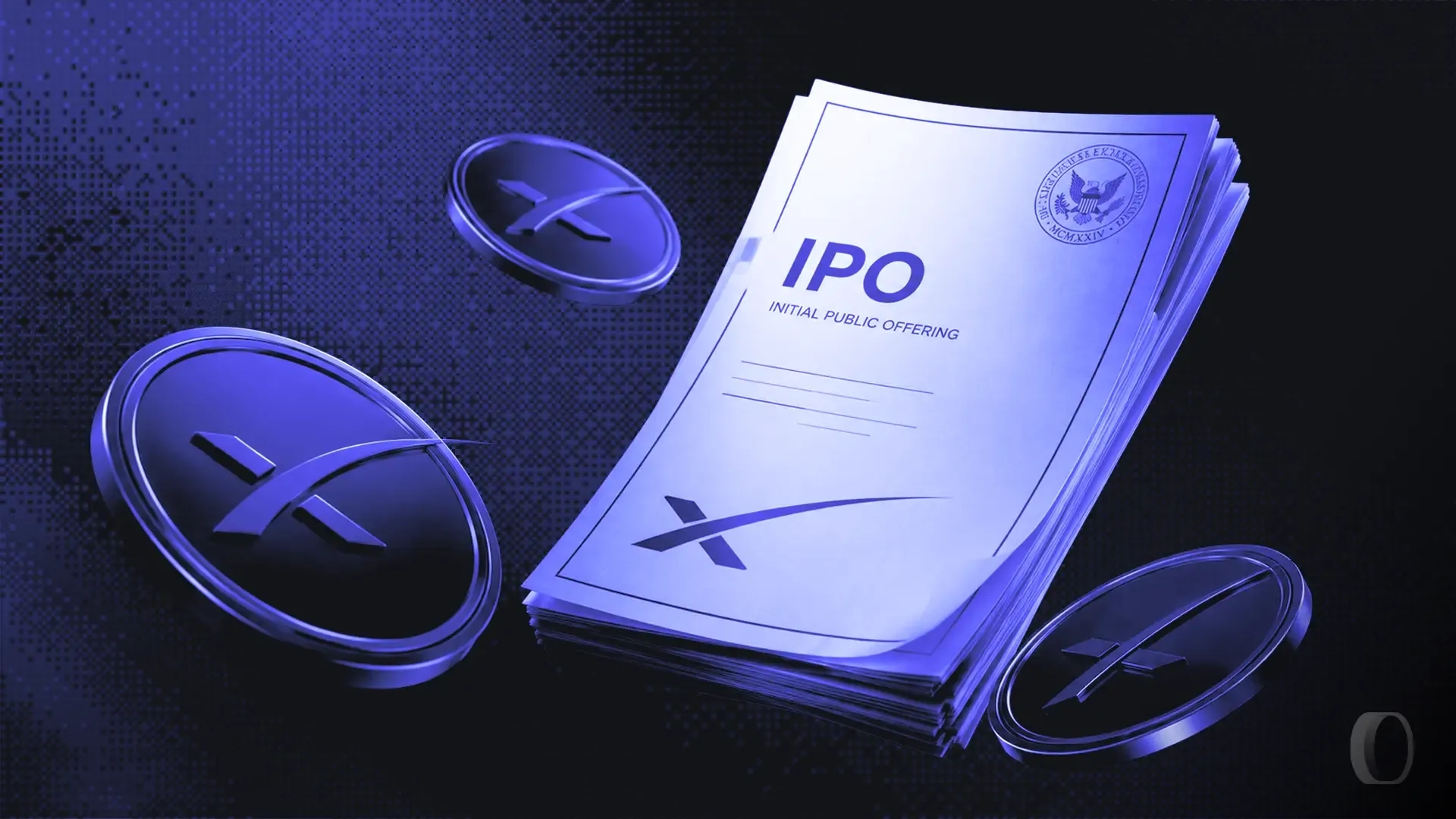
$75 billion raised, a $1.75 trillion valuation, and an offering already oversubscribed before subscriptions even opened: on paper, SpaceX's IPO is historic. But behind the record-breaking figures, the reality is less impressive, and the deal deserves a much closer look.
SpaceX is preparing a record-scale Nasdaq IPO under the ticker SPCX. The base case is an all-primary offering of 555.6 million Class A shares at $135 per share, implying a target raise of $75 billion and a valuation of $1.75 trillion.
The transaction is unusual in three respects: size, valuation, and structure. Proceeds are expected to go to the company rather than selling shareholders, retail allocation may be unusually high, and index inclusion could occur much faster than in a traditional IPO cycle.
In this article, we will go over the most important aspects of one of the most anticipated IPOs in history, as well as some concerns around the structure of the company, its positioning, and overall the “investability” of this IPO.
IPO structure:
At the reported valuation, SpaceX would list among the largest U.S.-listed companies from day one. However, the valuation is aggressive relative to current financials.
SpaceX made $18.7 billion in revenue in 2025, up 33% from the previous year. But losses have really exploded from a profit of $791 million in 2024 to a loss of $4.94 billion last year. The main reason for this loss in 2025 was the addition of the AI segment to SpaceX’s structure, but more on this later.
While Hyperliquid’s SPCX trading instruments are synthetic, and not actual SpaceX shares, it allows to get a better sentiment of what the IPO might actually look like once the trading is open.
The contract launched at a $150 reference price, implying approximately a $1.78 trillion valuation, and later traded at levels implying materially higher valuations. The contract reached an ATH of $230 per share, reaching almost a $3 trillion valuation. At the moment of writing, the SPCX IPO trades at around $155 per share, implying a valuation of around $2 trillion, or 14% higher than the actual IPO price.
SpaceX should be analysed as three businesses inside one holding structure.
Pillar 1 - Space - SpaceX’s MOAT
This segment includes Falcon, Dragon, Starship, commercial launch, crewed missions, and government / defense-related space services. Strategically, this is the foundation of SpaceX’s moat: reusable launch capability, high launch cadence, vertical integration, and strategic contracts.
Financially, however, the segment is not the main profit driver today because Starship development is consuming substantial R&D capital. This is also what the company is known for.
This pillar is the most important for SpaceX as it has a strategic importance for the US government, but also is the hardest to replicate by any other company that would like to penetrate this segment. Therefore, a loss spent on R&D is not really important here because of everything said above.
Pillar 2 - Starlink - The Golden Goose
Starlink is the commercial core of the company. It provides low-earth-orbit satellite broadband to consumers, enterprises, aviation, maritime users, governments, and underserved regions. It benefits from SpaceX’s launch advantage because SpaceX can deploy and refresh satellites at lower cost and higher cadence than competitors dependent on third-party launch providers. Today, Starlink has over 10 million subscribers.
For investors, Starlink is the most important financial asset inside SpaceX: it is the largest revenue contributor and the only clearly profitable segment at current scale. Basically, Starlink is the only element that provides any justification to the current company valuation.
Pillar 3 - AI - The pig that needs lipstick
The AI segment includes xAI, Grok-related products, X-related assets consolidated through the transaction structure, and the broader AI compute/data-center ambition. The strategic logic is that SpaceX may be able to combine energy, launch capacity, satellites, connectivity, and compute infrastructure into a differentiated AI platform.
The financial reality is that the AI segment is currently deeply loss-making and capital-intensive while not achieving the same results as its competitors and not nearly having as much traction.
Both X and xAI segments are what makes this IPO hard to analyse.
On March 28, 2025 xAI acquired X in an all-stock transaction valuing xAI at $80bn and X at $33bn equity value, or $45bn including $12bn of debt. Both valuation didn’t make sense as these companies were heavily unprofitable, but it was a way for Musk to save X since he bought it and made it a private company.
Then, SpaceX acquired xAI in a transaction reportedly valuing SpaceX at $1tn and xAI at $250bn. This moved a capital-intensive, loss-making AI business inside the strongest cash-flow and IPO vehicle in Musk’s ecosystem. This arguably made more sense than using Tesla where Elon Musk holds less governance power and where it would have been harder to justify such a move.
SpaceX is the first among the 3 most important IPOs of this year. The two that will follow are Anthropic and OpenAI, valued $965 billion and $950 billion respectively. Each company targets a $75 billion raise through their IPO totalling $225 billion.
The US market is currently valued at $68 trillion. These IPOs will therefore represent around 0.33% of the total market cap of US companies, or 104 times more than the dot-com IPOs in 1995-1998.
This creates three market risks:
One of the things to consider is the inclusion of SpaceX (and the other huge IPOs of the year) into passive indices. This would allow these companies to be included in pension funds passively buying shares and allocating capital to the companies included in these indices.
Nasdaq introduced a fast-entry framework allowing very large newly listed companies to enter the Nasdaq-100 after a short seasoning period, potentially as soon as 15 trading days after listing if they rank highly enough by market cap.
This rule change was widely interpreted as being designed for mega-cap IPOs, because under the previous framework such companies would have waited much longer before inclusion. This was the leverage used by SpaceX to get listed on Nasdaq instead of other trading venues (such as NYSE for example).
S&P Global did not follow Nasdaq’s approach. S&P considered but ultimately rejected changes that would have allowed SpaceX to enter the S&P 500 quickly despite limited trading history, low float and lack of profitability.
As a result, SpaceX may be eligible for faster inclusion in Nasdaq-related indices, but not immediate S&P 500 inclusion. This matters for flows: Nasdaq-100 inclusion could still create early passive demand, but the much broader S&P 500 passive bid is delayed until SpaceX satisfies S&P’s existing eligibility rules, including profitability requirements.
With all that in mind, should you actually buy SpaceX stock? Should investors expect it to move higher, or lower?
In an Alpha report reserved for our Premium members, we share our view on the situation and the key factors to consider when approaching this IPO with confidence.
Bitcoin (BTC), Ethereum (ETH), Ethena (ENA)
Bitcoin (BTC), Ethereum (ETH), Derive (DRV)
Bitcoin (BTC), Ethereum (ETH), Hyperliquid (HYPE), Derive (DRV)
Bitcoin (BTC), Ethereum (ETH), Derive (DRV)


