


A Closer Look at Derive V3 and the Promise of Distribution

Derive (DRV)
Published on

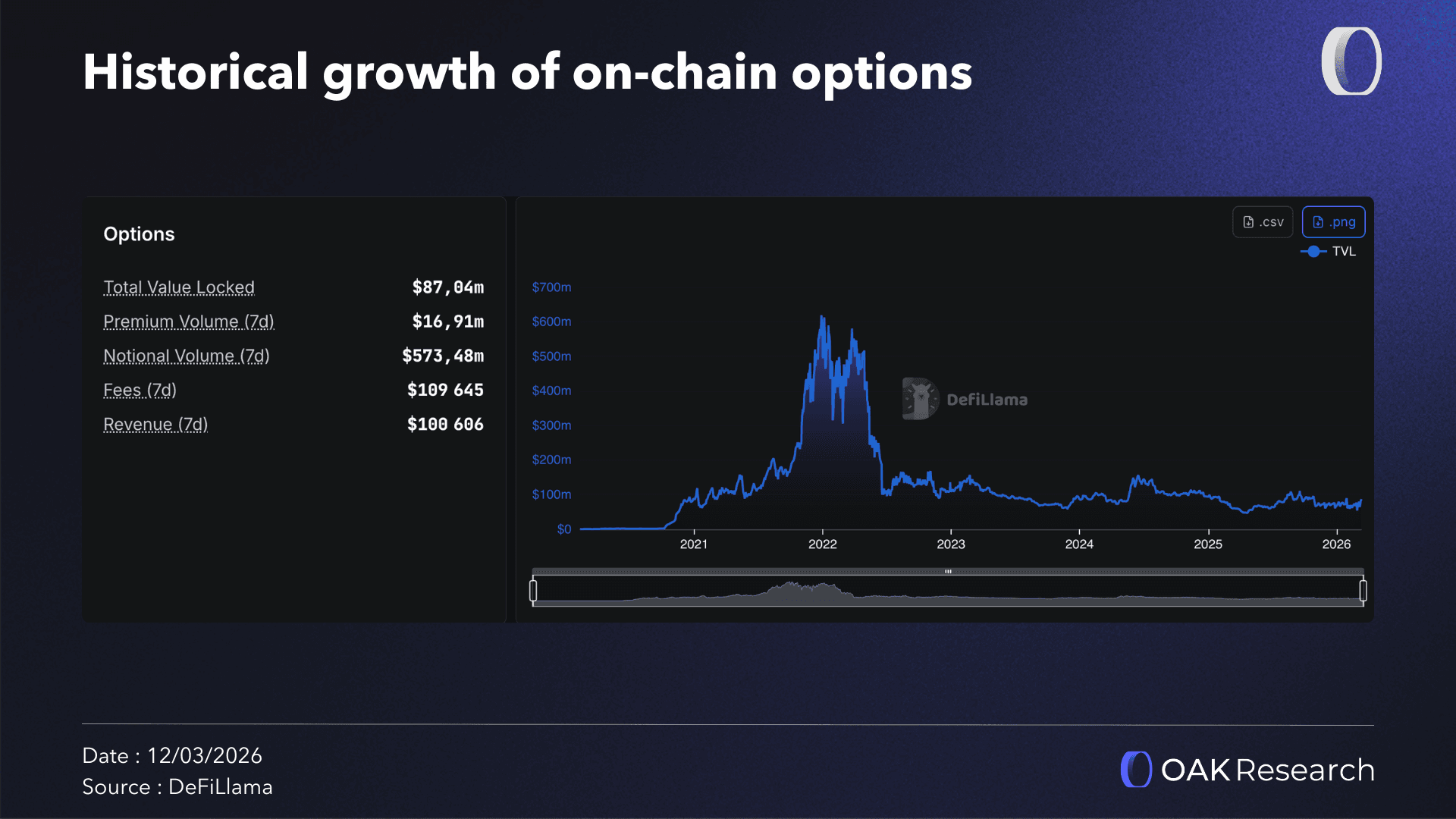
Options represent hundreds of billions of dollars in daily volume on traditional financial markets. They are massively used by institutions and professional market makers, which partly explains why on-chain finance struggles to replicate them. In this analysis, we take a look at the main protocols trying to make options accessible on-chain.
As more and more TradFi products migrate on-chain, several protocols have chosen to explore the options segment. This product, a pillar of traditional finance, is now being deployed by various actors within DeFi.
While perps are essentially a spot extension with a funding mechanism, options require active management of the volatility surface and deep liquidity across dozens of strikes and expiries.
This complexity explains why DeFi options account for roughly 0.2% of the on-chain perpetuals volume today. It’s still a niche, but it's the perfect complement to perps for anyone looking to build high-alpha strategies.
Before trading options, you need to master the basics, anon.
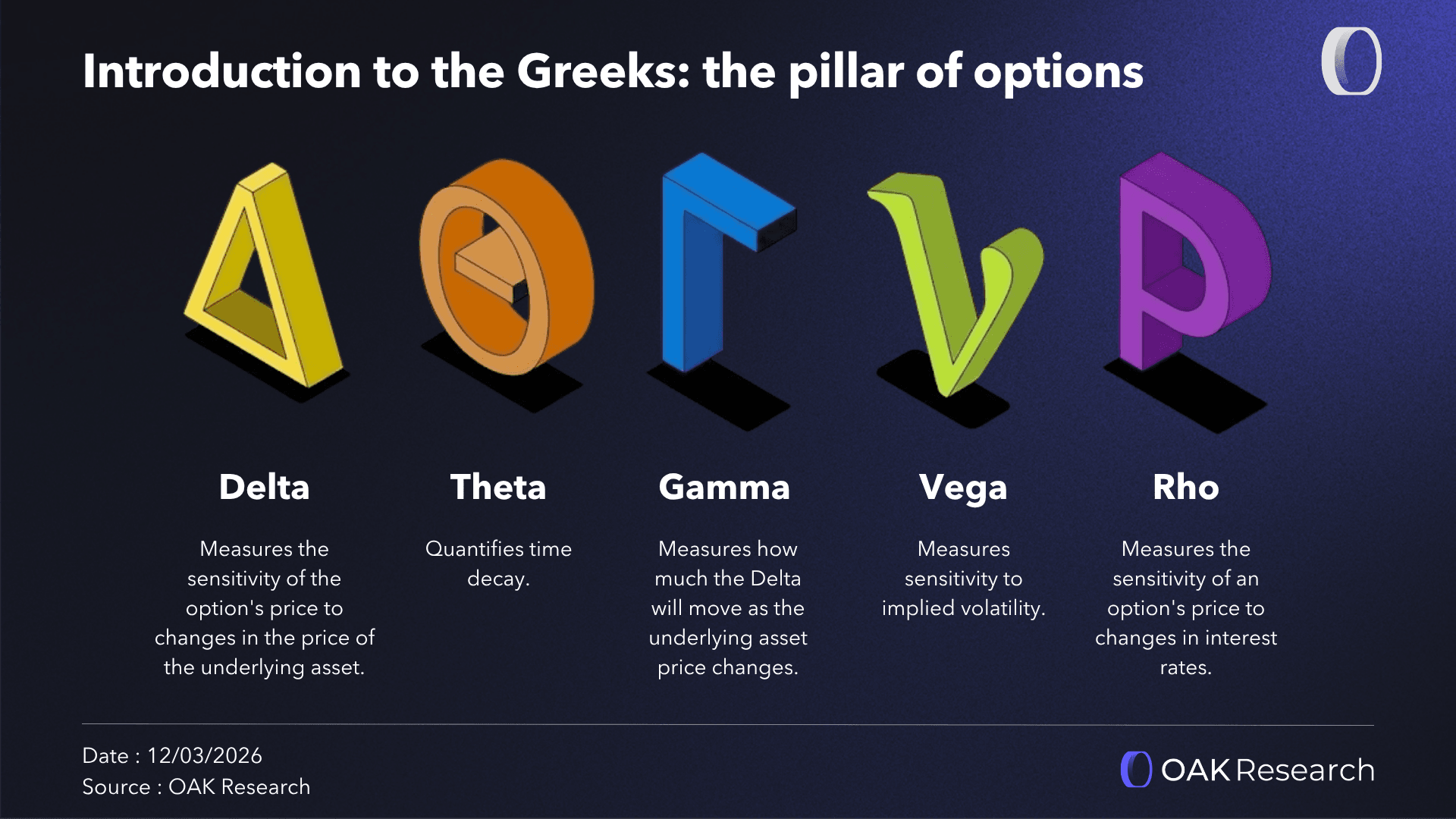
Options trading on DeFi Options Exchanges (DOEX) requires a clear understanding of asymmetric payoff profiles. Unlike perps, exposure is no longer linear, it depends on the "Greeks," which measure how different variables affect an option's price:
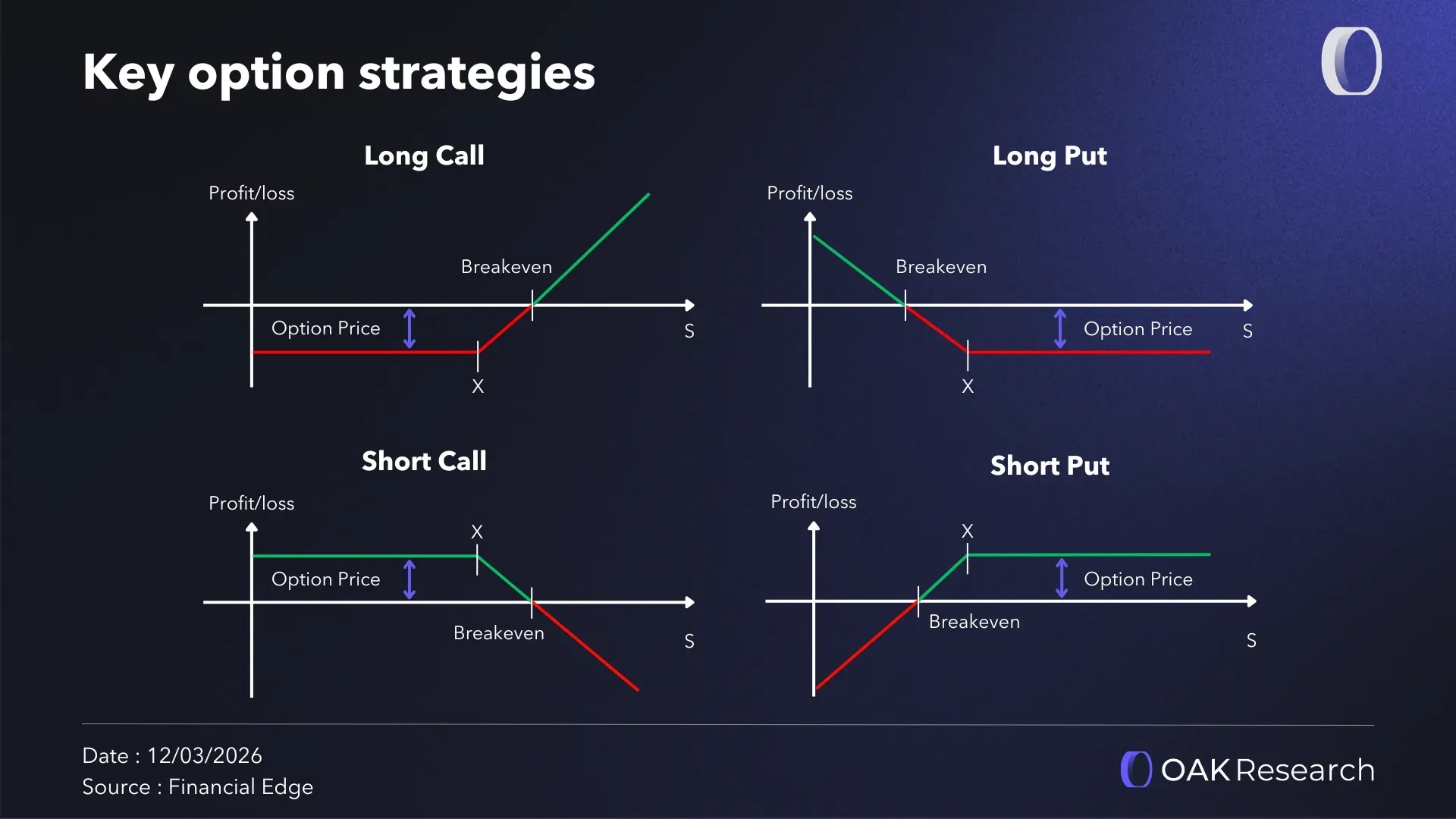
For instance, a Directional Call (Bullish) is used to capture upside in the underlying asset with built-in leverage, providing a way to profit from price increases without owning the asset itself.
Conversely, a Directional Put (Bearish) serves either as a hedging instrument to protect an existing portfolio or as a way to speculate on downward price moves.
When buying options, losses are capped at the premium paid, while potential gains remain theoretically unlimited.
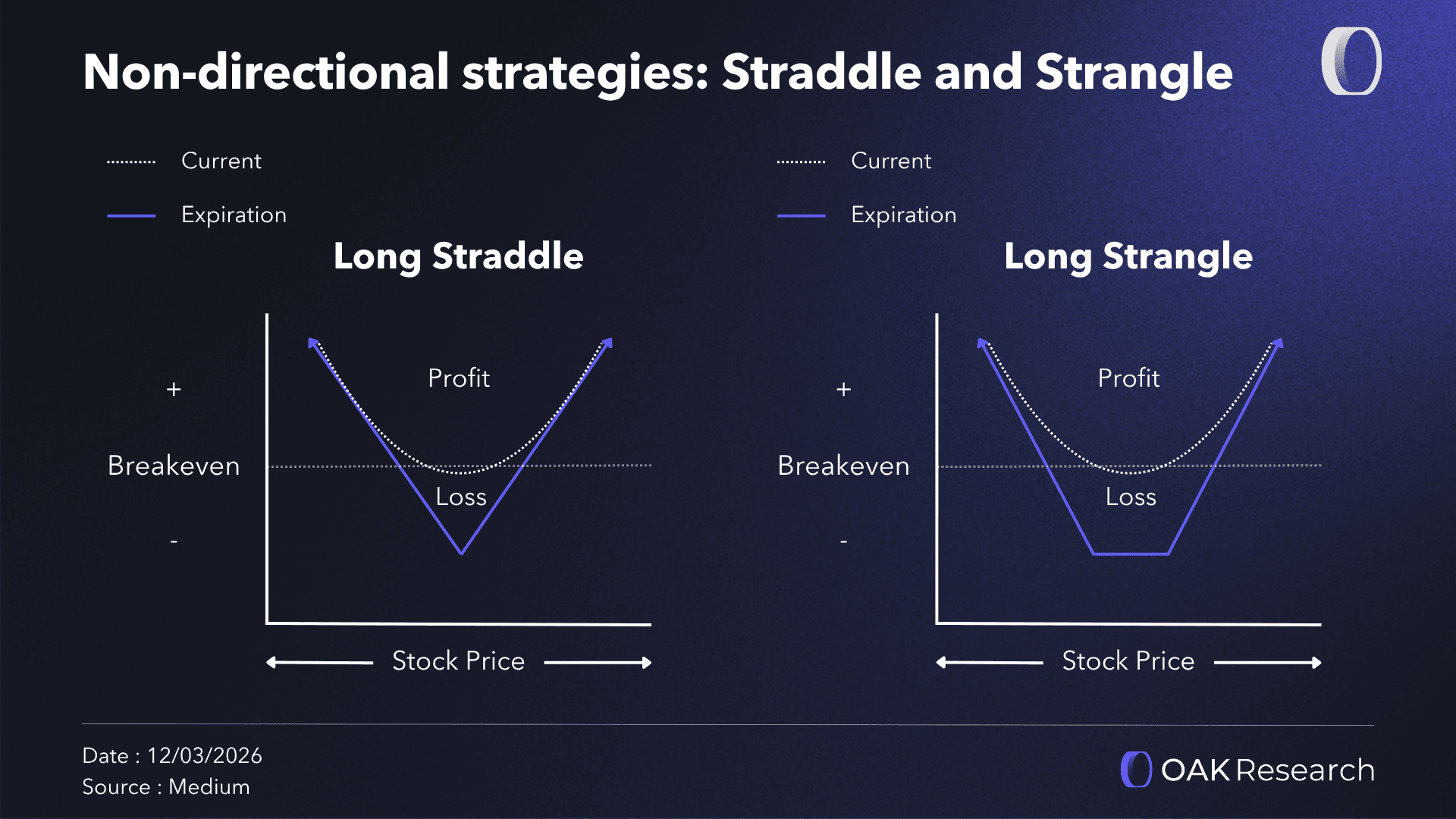
Understanding these mechanics is the first step, but the real challenge lies in execution. In a landscape where liquidity is king, a few DeFi protocols have managed to build the infrastructure necessary to support these strategies.
Here are the 3 major players currently defining the space.
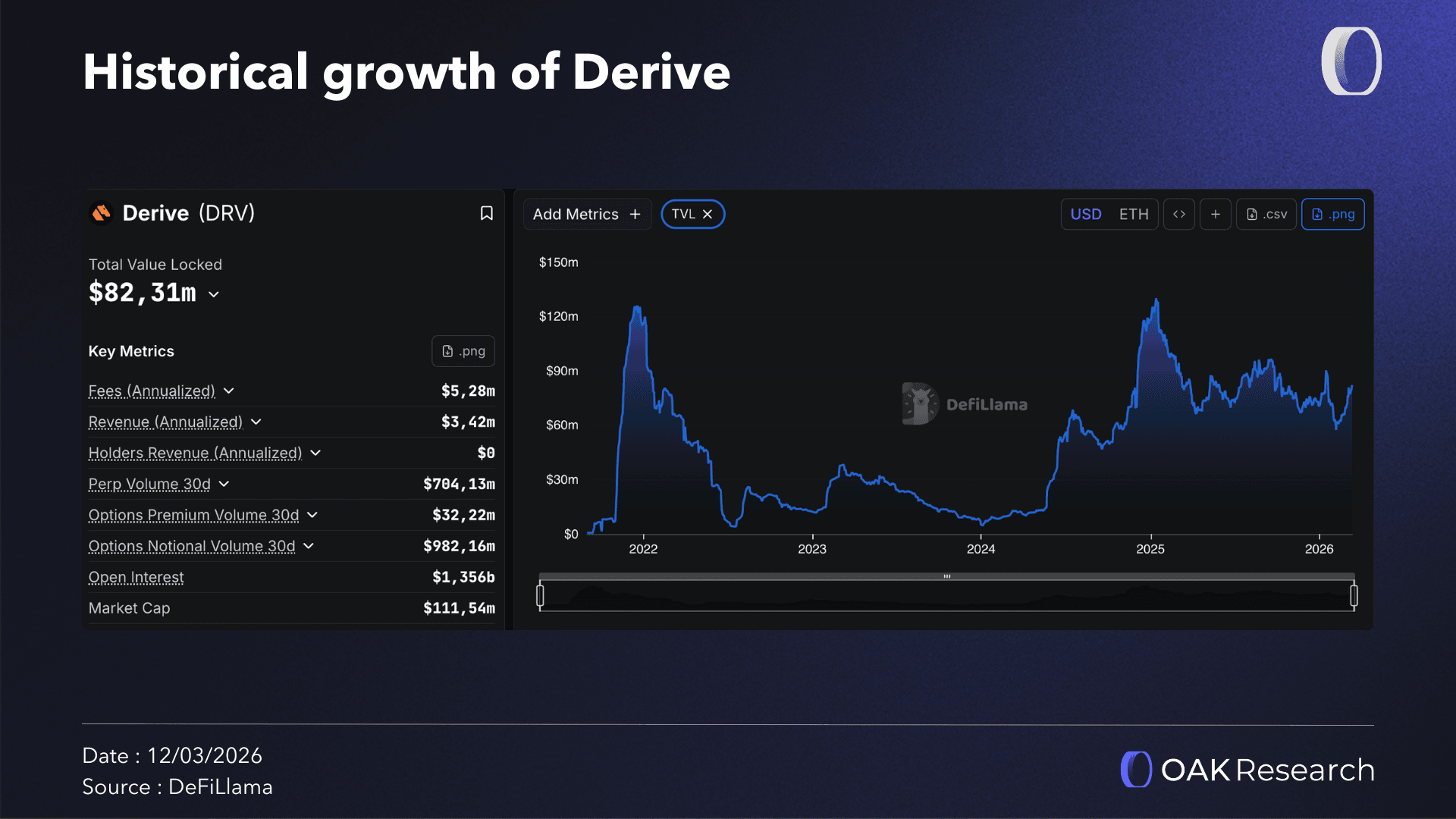
Derive has evolved beyond general-purpose L2 constraints by launching its own App-Chain, built on the OP Stack, to better control performance and market microstructure. It currently holds around $90-100M in TVL, with a 30-day perp volume over $200M and options notional exceeding $500M.
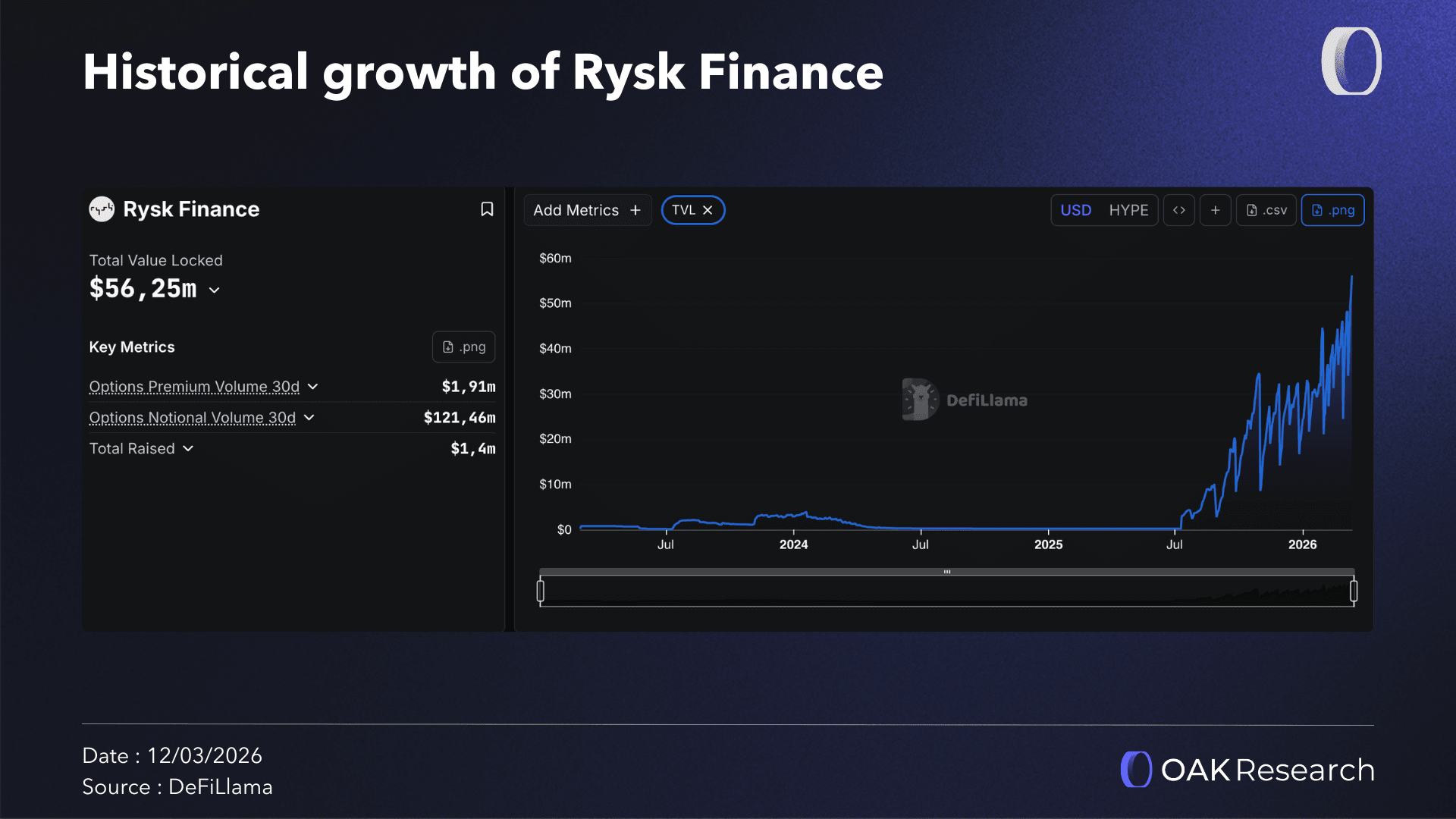
Rysk stands out as the dominant volatility yield layer built natively on Hyperliquid. With a TVL of ~$50M (split across Hyperliquid and Arbitrum), it has generated ~$2M in 30-day option premiums with a cumulative notional >$593M.
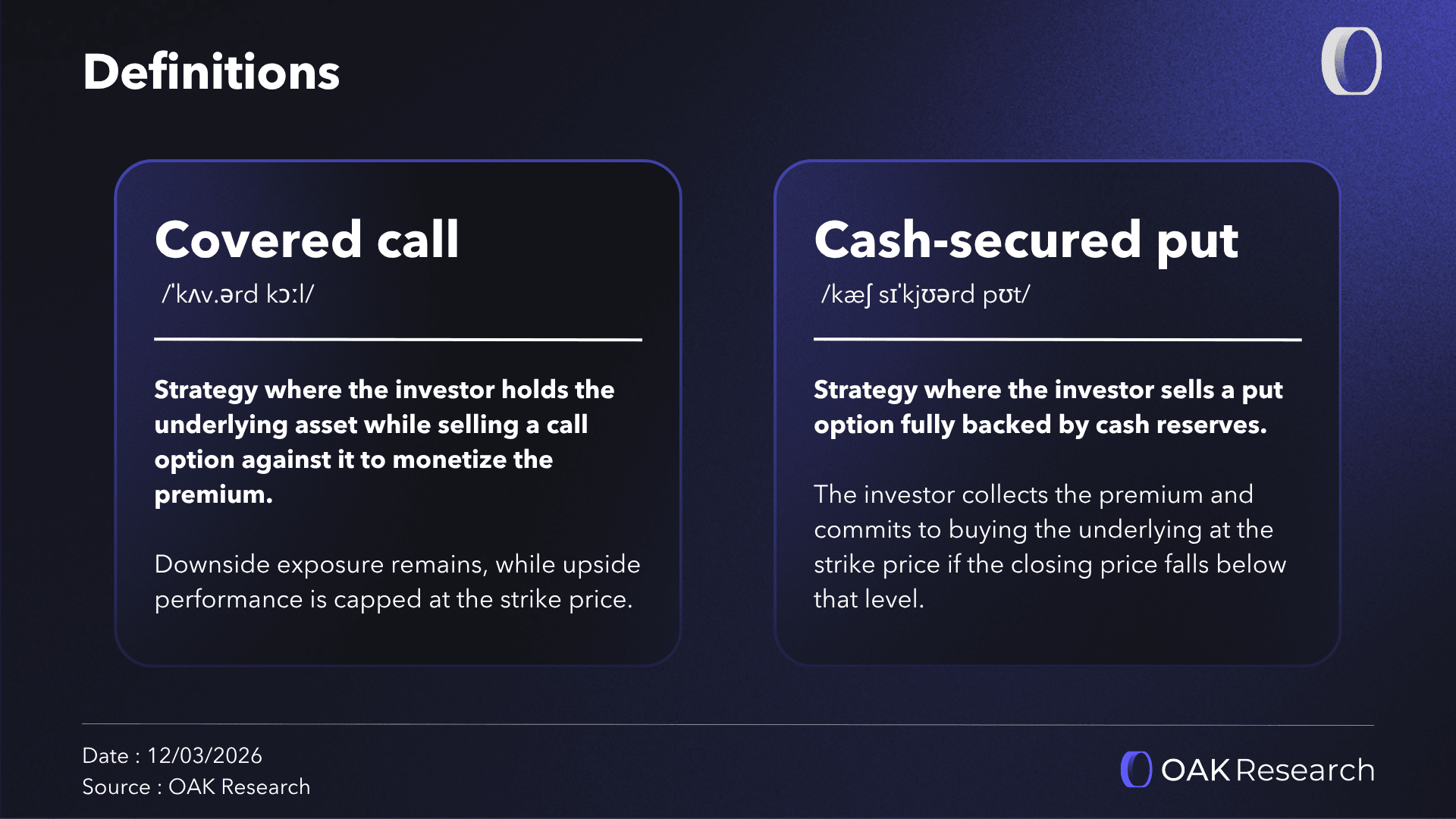
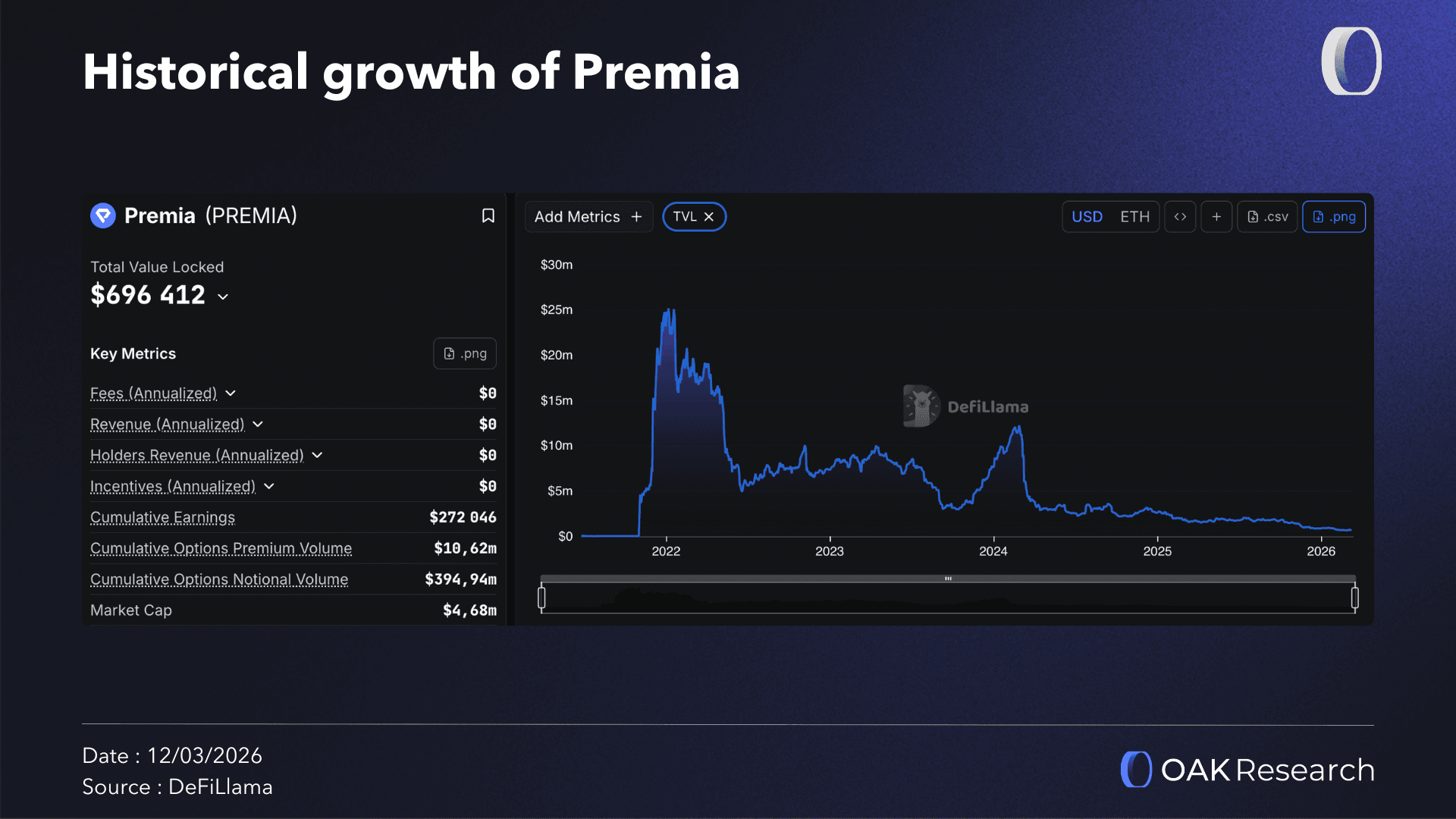
Kyan represents the pivot from Pool-to-Peer models toward a hybrid infrastructure centered on a Central Limit Order Book (CLOB). Despite a lower TVL of ~$700k, its cumulative notional has passed $394M.
Here you can find other honorable mentions of protocols offering options trading in crypto today:
DeFi options exchanges are not a simple replica of the well-known TradFi instrument.
While the theoretical potential of on-chain options is massive, the sector faces significant structural headwinds that prevent it from reaching the same scale as the perpetuals market.
Moving from a linear instrument like a perp to a non-linear one like an option exposes the inherent limitations of current blockchain infrastructure, from liquidity fragmentation to latency constraints.
On a spot DEX or a perp DEX, liquidity is concentrated on a single pair (e.g. BTC/USD). Options, by contrast, require liquidity to be spread across dozens of strike and expiry combinations.
This dispersion mechanically results in shallower markets.
CLOBs Platforms like Deribit retain their dominance because they offer near-zero latency, which is essential for market making.
DeFi, even with App-Chains, still suffers from a latency tax that ultimately shows up for users through wider spreads.
In TradFi, the OCC guarantees solvency at the system level. In DeFi, there is no clearinghouse: solvency relies entirely on collateral locked in smart contracts.
Unlike regulated markets where settlement prices are institutional and stable, on-chain option settlement depends on oracles, which introduce latency and, in worst cases, manipulation risk.
Slippage in DeFi options is more complex than in standard AMMs, and its mechanics differ depending on the model.
On vault-based protocols (e.g. Rysk), when a trader executes a large order, the pool acting as counterparty becomes exposed to significant directional risk. To protect itself, the algorithm adjusts the skew, which directly impacts the execution price. The larger the order, the more aggressively the skew shifts, making large directional trades increasingly costly.
On order-book-based protocols (e.g. Derive), slippage is a function of market depth across strikes and expiries. Given how thin liquidity is when spread across dozens of combinations, a large order can quickly exhaust available liquidity at the quoted price, resulting in significant price impact, even on a CLOB.
Either way, as soon as the book or vault become imbalanced, execution prices can diverge sharply from quoted prices, making large-scale hedging strategies extremely costly on-chain.
Treat DeFi options as high-risk, high-skill instruments. Start small, diversify, and avoid leverage unless you fully understand the Greeks.
In most cases, perps or CLOB DEXs remain far more efficient.
As we see more financial products get integrated onchain, we can expect more traditional finance players to tokenize access to their options, eliminating many hurdles present in the current system design of the protocols we have covered in this article.
Unfortunately, today options remain a marginal product of the crypto ecosystem. Unlike perps, where the funding mechanism stays intuitive, options require active management of the Greeks and their interactions. That learning curve sits closer to professional trading than retail speculation, structurally capping the addressable audience. Thin liquidity does the rest, preventing the few who do engage from trading with any meaningful size.
However, with growing institutional interest, protocols offering the right 'rails' deserve attention, as traditional firms will likely acquire or implement them to scale.
Derive (DRV)

Derive (DRV)

Aave, Derive (DRV)

Ethereum (ETH)


