
Market Briefing 9: Bitcoin (BTC) corrects ahead of the Fed, CLARITY Act rejection shakes crypto markets

Bitcoin (BTC), Ethereum (ETH)
Published on

Ethereum researchers have submitted a proposal that has reignited the debate around ETH tokenomics, and more specifically around the inflation tied to staking on the network. In this article, we break down everything you need to know about EIP-8363, the arguments surrounding the proposal, the points raised by many major figures in the ecosystem, as well as our own take on these potential changes.
Ethereum's monetary policy, and more specifically the part relating to staking, has been debated for years. For the first time, those discussions have crystallised into something concrete: an EIP titled "Tapered Issuance Burn", filed under the code EIP-8363.
Fairly complex on the technical side, this EIP is designed to ensure that ETH issuance, which is correlated to the amount of ETH staked, becomes mechanically capped by defining a threshold beyond which staking ETH no longer generates any return.
As things currently stand, the more ETH is staked, the more new Ether the protocol issues, but the less each validator receives individually. More precisely, the exact rule is that yield decreases as the inverse of the square root of the staking ratio. In other words, if the amount of ETH staked doubles, each participant's yield is not cut in half: it only falls by around 30%. That is a very slow decline, and it is the source of the problem identified by the EIP's authors, namely Jérôme de Tychey, pintail, Justin Drake, dapplion, pa7x1 and Ladislaus von Daniels.
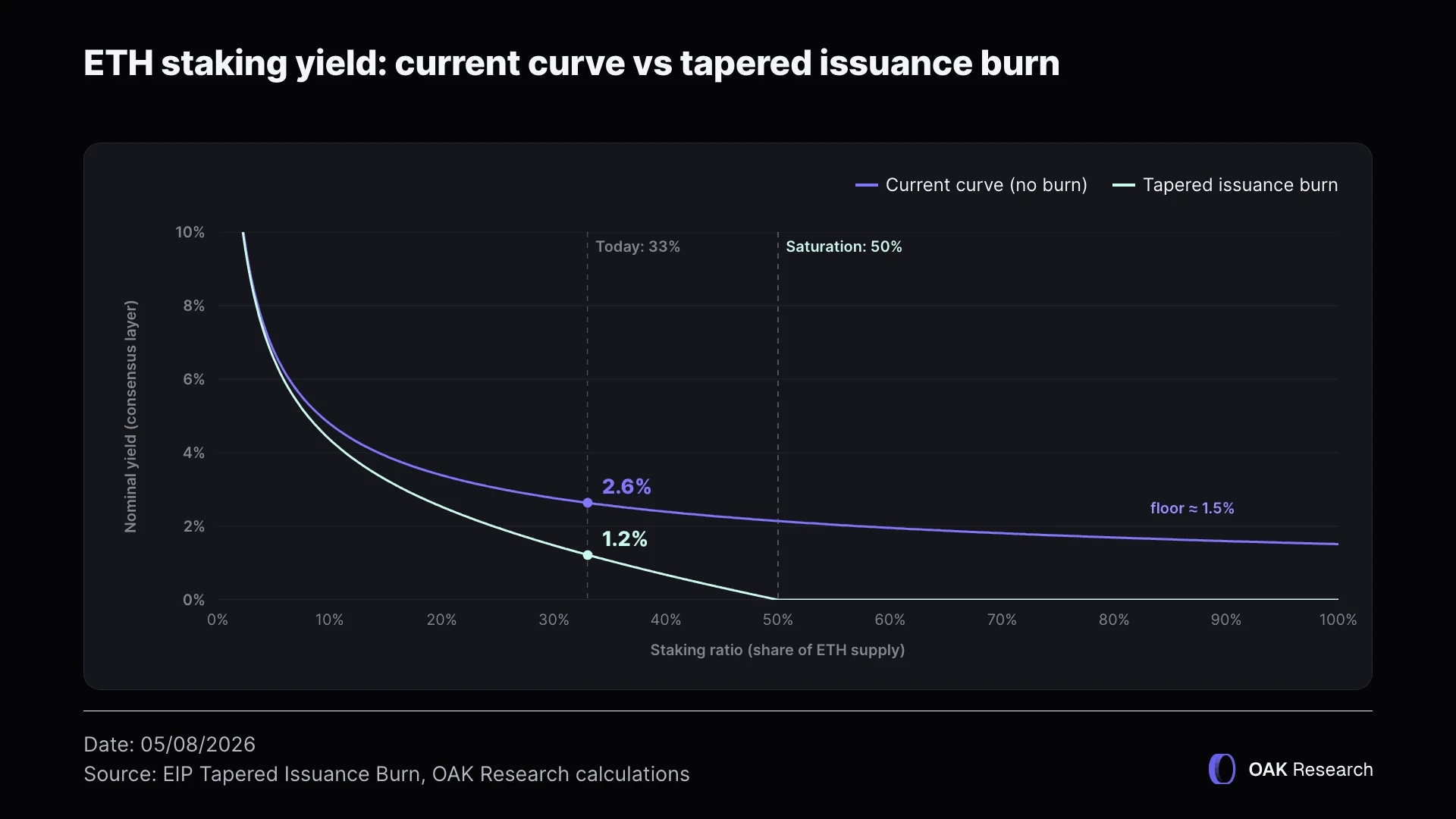
In their view, this slowness means the real yield never really falls far enough. To give you an idea, if the entire current ETH supply were staked, the yield would still sit at 1.5%. Put differently, the incentive mechanism currently has no quantifiable limit: staking remains theoretically viable as a way to generate returns, always.
In practice, native staking on Ethereum faces a fairly complex situation: the validator queue has been completely saturated since February, a sign that demand for staking is ultimately stronger than what might be considered "healthy" for the network.
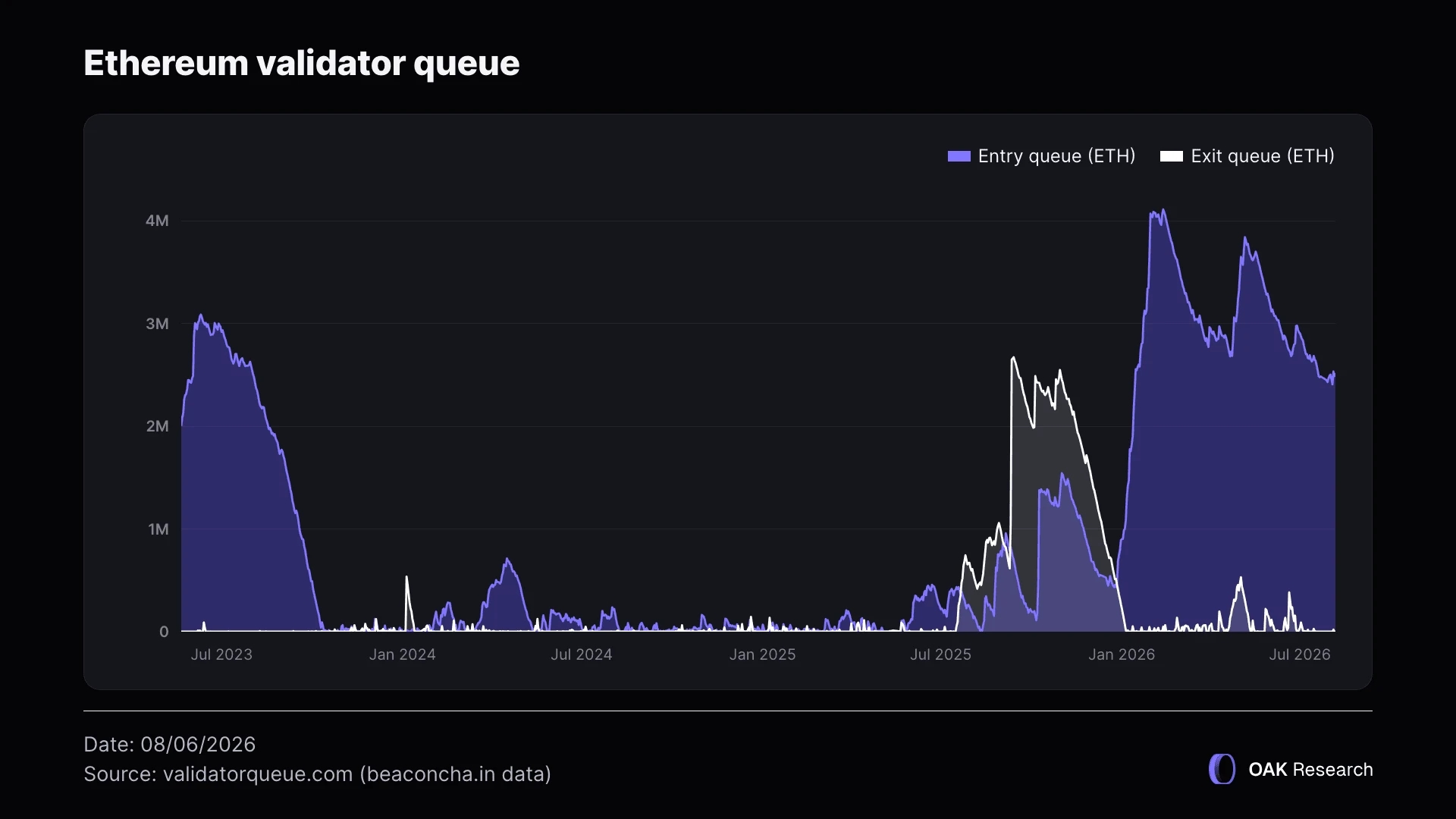
Faced with this, one might be tempted to think that it is a good thing after all, since the higher the amount of ETH staked, the more secure the network theoretically is. Yet beyond the amount itself, it is the way staked ETH is distributed that would pose a problem.
As it stands, a large share of ETH holders stake their assets indirectly through intermediaries (ETFs, exchanges, LSTs, institutions such as Bitmine), which, according to the researchers, would create difficulties for the community's ability to coordinate in the event of an emergency fork.
At the same time, a second issue is that the ETH issuance allocated to validators is funded by all ETH holders. Concretely, it acts as a form of permanent dilution on net supply (issuance minus burn) for everyone who does not take part in staking. Every investor is therefore faced with a rather artificial choice: accept being progressively diluted, or stake their ETH to offset that dilution, regardless of any personal appetite for staking.
Meanwhile, as the staking rate climbs, liquid staking tokens occupy an increasingly important place in on-chain finance. Gradually, native ETH becomes slightly less the reference collateral and more a claim on staked ETH, with everything that implies in terms of smart contract, governance and counterparty risk.
Finally, and this is a fairly long-standing criticism levelled at Ethereum, there is the inequality that ETH issuance introduces between holders. The reasoning goes as follows: all stakers earn the same percentage yield, but not all ETH holders choose to stake, and that decision depends largely on position size.
Indeed, for a large holder, the marginal cost of staking is now close to zero, which makes the operation almost automatic. Solo stakers, on the other hand, who generally hold smaller positions, are constrained by various operational factors such as the fixed costs they have to bear. ETH issuance, which is meant to reward stakers, therefore concentrates mechanically on the largest holders and, over the years, contributes to progressively transferring an ever-greater share of the supply toward the top of the distribution.
On this specific point, it must be acknowledged that EIP-8363 provides a direct answer. Nevertheless, by compressing yield, the proposal risks pushing out first the participants with the highest break-even threshold, which is to say precisely the small validators the EIP is trying to protect.
Unlock all our research and get the right insights, at the right time.
The proposal rests on a fairly simple idea: progressively removing the economic incentive to stake once the blockchain's security level is already deemed sufficient. It bears repeating that if native ETH staking offers a yield, it is above all because the deposited ETH forms Ethereum's security layer. In that sense, more staked ETH mechanically means more trust placed in the network.
As we have seen, the issuance curve today never truly cuts off staking yield. The return declines as more ETH is locked up, but it always remains positive. As long as the risk premium demanded by investors sits below that yield, staking therefore keeps growing. Today, the share of deposited ETH has hit an all-time high, with 34% staked.
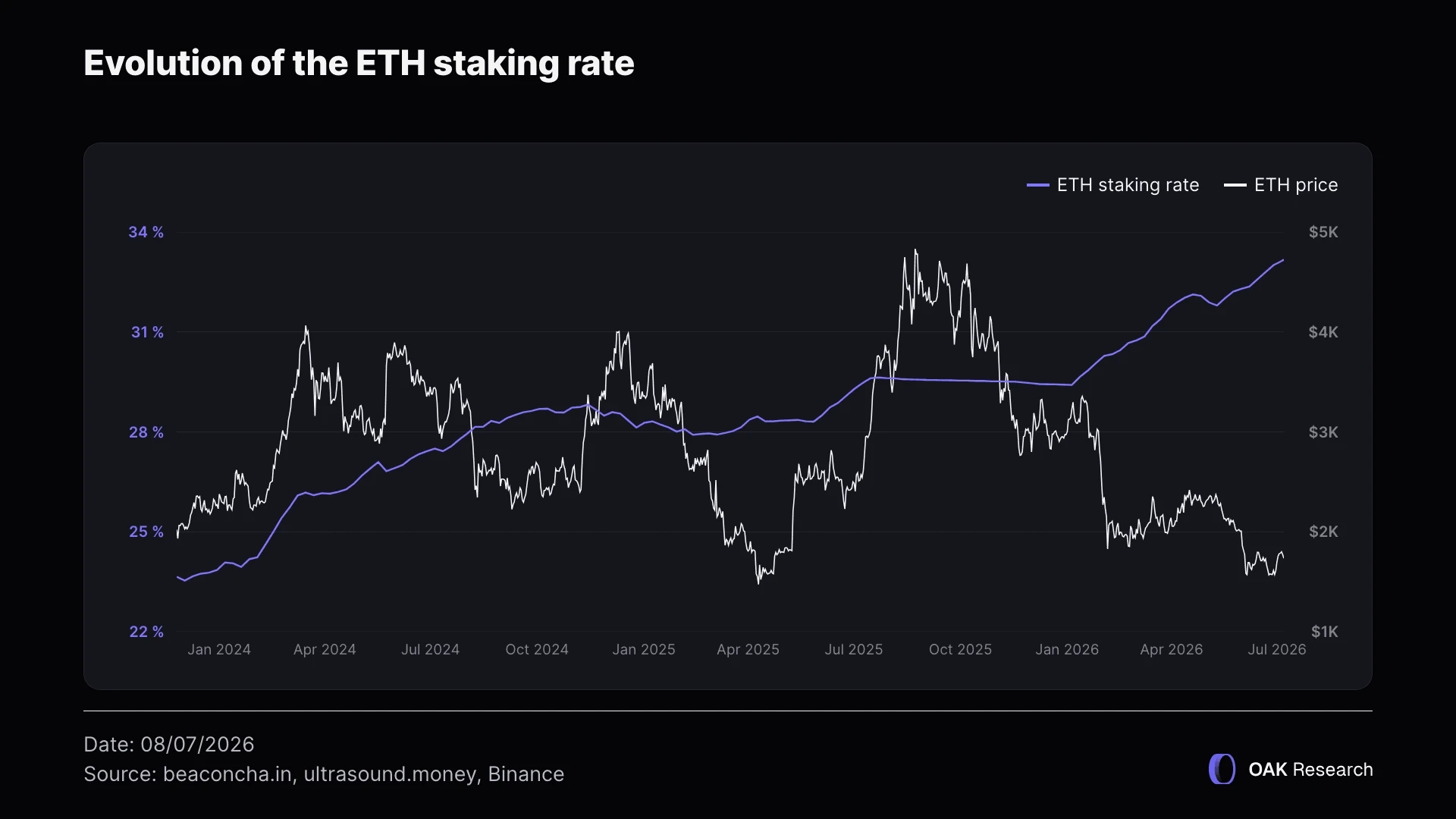
Faced with this, the authors of EIP-8363 propose a different logic. The curve they put forward is built so that the net yield converges progressively toward zero as the staking rate rises. In their view, and this point is important to grasp, the goal is not for validators to actually end up earning 0%, but for the protocol to stop artificially maintaining a yield floor and to let the market determine its own equilibrium point.
In other words, if investors consider that a 1% yield is enough to compensate for staking risk, the network will naturally stabilise around the level where that condition is met. Conversely, if the market demands a higher premium, some validators will leave the network until the yield rises again. Either way, it is no longer Ethereum implicitly deciding the staking rate through its issuance, but a mechanism anchored in supply and demand.
On the monetary side, EIP-8363 brings together 3 important elements around a new burn mechanism:
At first glance, the two approaches look fairly similar. Yet cutting rewards at the source would also require reducing the penalties imposed on validators, since both rely on the same unit of account. Lower penalties would mechanically reduce the cost of problematic behaviour, particularly in the face of the well-known MEV problem, and this is exactly why the burn avoids that side effect.
Validators keep receiving exactly the same gross rewards and remain subject to the same penalties as today. Part of those rewards is simply destroyed after being awarded, which reduces net issuance without altering the incentives that underpin protocol security.
EIP-8363 does not provide for a fraction of the rewards actually earned by a validator to be deducted; instead, the deduction is calculated from a theoretical reward corresponding to perfect performance.
This distinction matters, because if the burn depended directly on the rewards actually received, each additional effort would only yield a fraction of its potential gain. Here, the amount burned stays identical whether a validator performs flawlessly or not, which keeps the economic incentive to do the job properly fully intact.
Sending the deducted ETH to a dedicated treasury or redistributing it to other validators would amount to maintaining exactly the same level of overall issuance as today, while creating a new permanent beneficiary for whom allocation would quickly become a political matter. The burn avoids that problem, while remaining consistent with EIP-1559.
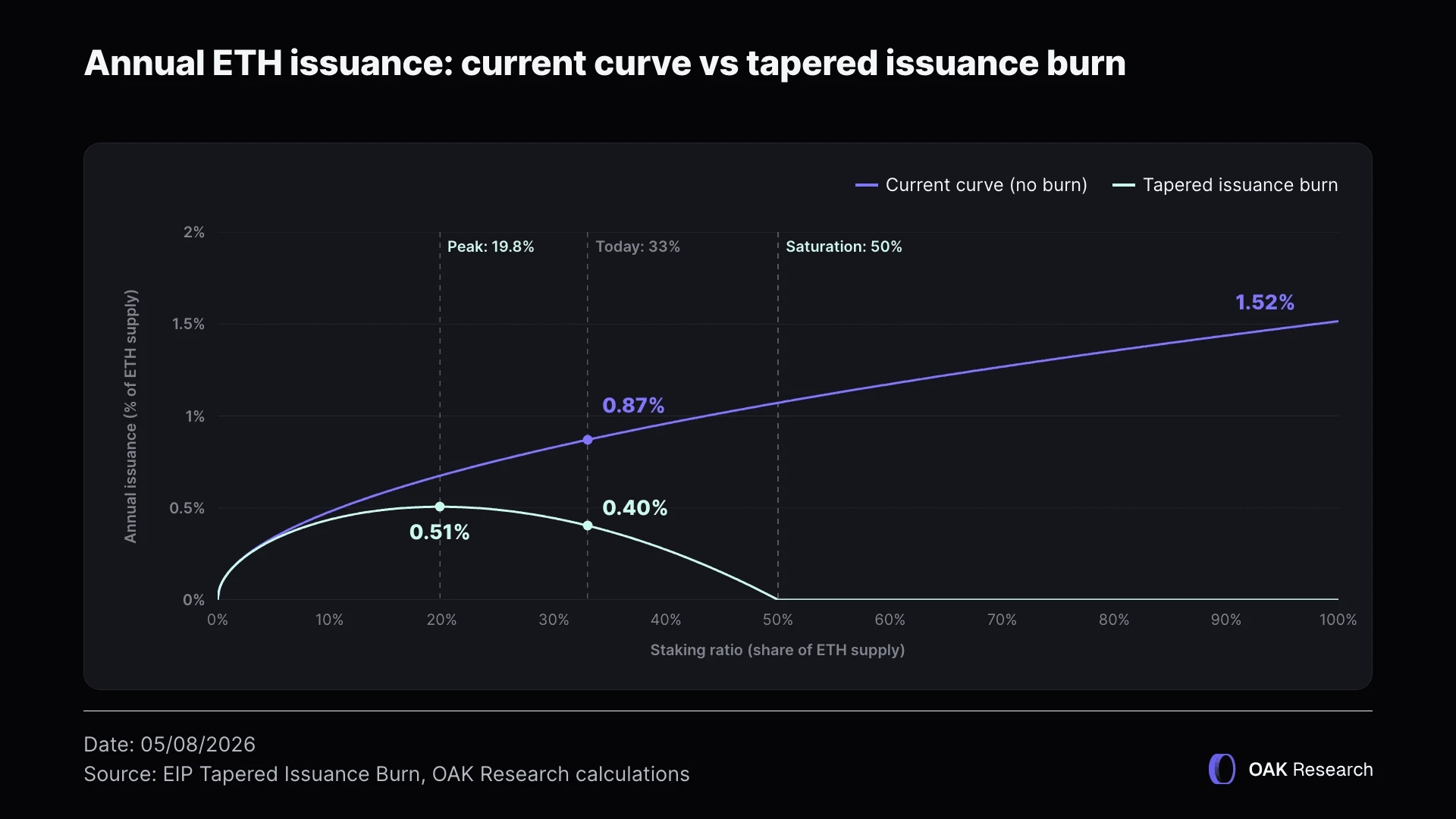
In practice, under this new curve, annual issuance would peak when staking represents around 20% of total supply, before gradually declining. At its highest point, it would represent roughly 0.5% of supply per year. It is worth noting that this peak is already behind us, since with around 34% of supply staked today, the network already sits on the declining branch of the proposed curve.
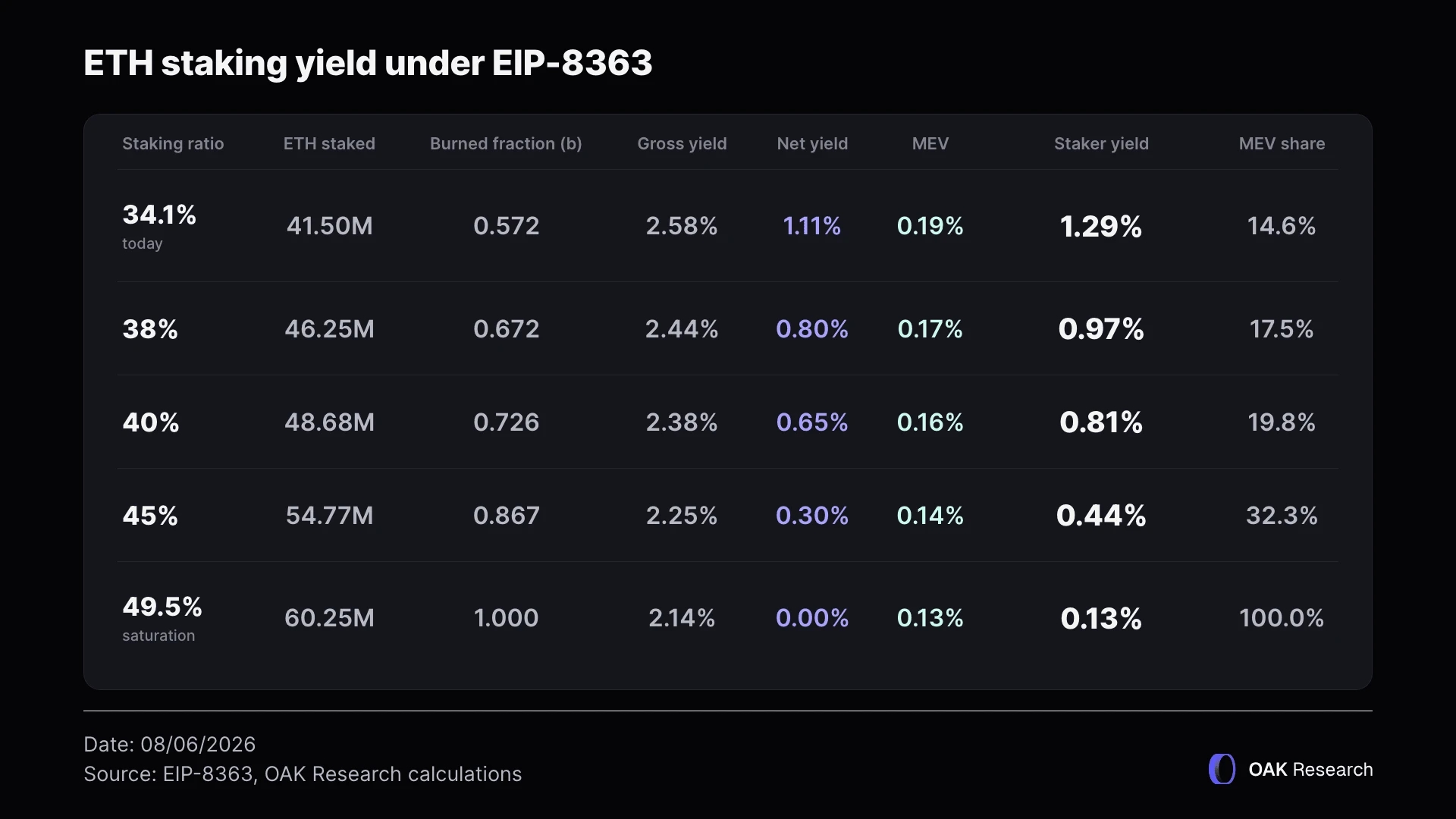
For comparison, validator revenues today come almost exclusively from this issuance. Rewards represent roughly 2.58% in annual yield (based on the current staking level), against only 0.19% for revenues from the execution layer, meaning priority fees and MEV. Put differently, more than 90% of a validator's current income still comes directly from Ethereum's monetary issuance.
Should this EIP eventually be implemented, the native ETH staking yield would drop from roughly 2.58% to 1.11% based on the amount of ETH currently locked. This is why the change would be phased in gradually, to avoid a collapse in the amount of ETH staked.
Concretely, at the time of the fork, the BASE_REWARD_FACTOR parameter, which determines all consensus rewards, would temporarily be doubled, going from 64 to 128. Since this parameter influences both the rewards paid out and the share subsequently burned, the proportions remain unchanged and the net yield received by validators stays, initially, close to current levels.
From there, the BASE_REWARD_FACTOR gradually comes back down toward 64 over an 18-month period through small successive adjustments made roughly every 8 days. Factoring in the 6 months that generally separate the adoption of a fork from its activation on Ethereum, this gives the market close to two years to absorb the changes brought by EIP-8363.
That said, this transition only alters the level of rewards, not their underlying logic. Indeed, from the very first epoch following the fork, net issuance will become 0 beyond 50% staking. Put more simply, the new curve applies immediately, while the yield is merely cushioned over time.
It is precisely this transition mechanism that quickly became one of the main points of contention, not because it softens the drop in yield, but because it introduces a side effect that the authors barely address in their proposal, as we will see below.
The least that can be said is that the majority of the feedback on this EIP has been negative, whether on the dedicated forum or on X. Here is a tour of the main arguments that have been put forward.
Stani Kulechov reacted in a notably strong way to this EIP, which is easy enough to explain given that it directly affects Aave's economic activity, particularly because of the potential impact on LSTs.
His first point is that the proposal would directly hit solo stakers as net yield shrinks. Unlike ETFs, corporate treasuries or exchanges, whose staking is structurally driven by motives other than yield alone, solo stakers bear fixed hardware and electricity costs, which is why net yield is an essential figure for them.
Under the proposed model, he argues that individual stakers would ultimately have no interest in helping secure the network, since the economic incentive would be too weak, or even non-existent in the worst case. As a result, in his view, the staking landscape would be occupied by those who have a purely operational interest in doing so, which is to say precisely the entities that EIP-8363 is trying to push aside. In other words, the near-zero yield regime being proposed would risk accelerating exactly the concentration the proposal initially seeks to limit.
Second, he also highlights the fact that, during the transition period we discussed earlier, the temporary doubling of the BASE_REWARD_FACTOR doubles the rewards credited to validators before burning half of them. Net yield therefore remains almost unchanged, as intended, but the taxable base is doubled in jurisdictions that tax rewards at the moment they are received, which creates a genuine problem. The solo stakers concerned would pay tax on their theoretical gross income, rather than on the final value.
He then explains that if the staking risk premium really does trend toward zero as the EIP assumes, the natural equilibrium sits at the point where net yield becomes nil, meaning when nearly all of the eligible supply is staked. Under that model, the mechanism prevents nothing at all: it simply produces a high staking ratio with no remaining compensation for honest validators, and therefore no real security budget.
And if, conversely, that risk premium remains significant, the growth of the ratio was going to stabilise on its own anyway, which makes the intervention pointless. So in either scenario, the mechanism cannot, in his view, produce the intended effect.
In parallel, Stani Kulechov argues that this would have serious consequences for Ethereum ETFs offering staking, such as BlackRock's ETHB. By lowering the yield generated by native staking, you lower returns for these ETFs' investors, and you mechanically reduce their level of exposure, as they go looking for something more attractive elsewhere.
Another friction point concerns the MEV. Since the burn only applies to issuance, reducing the latter mechanically increases the weight of MEV in validator revenues. Yet that is precisely the component solo stakers capture least effectively, for lack of orderflow and relationships with builders. With lower issuance, choosing a non-censoring relay therefore progressively becomes an economic cost rather than a simple matter of principle, which ultimately runs counter to the neutrality objective defended by the EIP's authors.
Finally, he believes the consequences would extend well beyond the staking vertical alone. It is worth remembering that this native yield on ETH currently constitutes the base rate of the Ethereum ecosystem, the reference from which most DeFi strategies are priced. In that sense, halving it would amount to weakening all of those mechanisms, progressively pushing investors toward stablecoins and ultimately turning ETH into a mere financing asset rather than an asset held for what it is and for its intrinsic value, of which the staking yield is an integral part.
We felt it was worth sharing a quote from Stani Kulechov's response on the Ethereum Magicians forum, which speaks for itself in explaining how ETH could even lose on its own turf against BTC:
And if ETH is beta only, it is not obviously the best beta. That is the part I find hardest to look past. ETH’s case against BTC for an allocator was never that it was a superior store of value; it was that it was a productive asset with a cash flow BTC structurally cannot offer. Take the yield away and ETH is left competing on BTC’s home ground, where it has to win on liquidity depth, ETF distribution, institutional acceptance and narrative simplicity. It does not win on any of those. What it does offer is higher volatility, more protocol risk and more governance risk, and the yield was the compensation for exactly that. Strip out the compensation and you have an asset that moves in the same direction as BTC, with more downside, and no income to hold you through it. Anyone who wants crypto beta rotates to BTC, and anyone who wants yield rotates to stablecoins. ETH gets squeezed from both sides at once. - Stani Kulechov, Ethereum Magicians
Much like Stani Kulechov, the CEO of ether.fi maintains that this EIP would inevitably squeeze out solo stakers, and that only centralised entities with a zero cost of capital would keep staking.
He then explains that the impact on on-chain finance would be chaotic and that most blue chip protocols would face significant capital outflows, quite simply because this EIP would completely redraw the role and economic appeal of ETH within that ecosystem, particularly where LSTs are concerned.
The third strand of his argument focuses on the price of ETH itself and the exit risk it creates. He questions the idea that a 0.8% reduction in issuance could support the price of Ether, pointing out that those who stake their ETH are not selling it. In his view, the measure would instead halt any new staking and could trigger the unstaking of tens of billions of dollars' worth of ETH, which would then come back onto the market with all the consequences that entails.
His fourth point aims to answer the argument that liquid staking tokens threaten ETH's monetary role given that they represent roughly a quarter of the total staked. According to him, this "accounting view" reasoning, which would only count immediately available cash and deposits as real money (M1 in economic terms) while ignoring everything that fulfils a monetary function without being quite as liquid, is outdated.
For him, LSTs such as stETH or eETH play exactly that role. Backed by staked ETH, tradable and usable as collateral in DeFi, they offer users protections that it would not make sense to implement at the protocol level, for a near-zero cost of around 10 to 15 bps.
Lastly, his final criticism is aimed more at the ethos of EIP-8363, and this is objectively a piece of feedback that came up a great deal regarding the authors, with some accusing them of proposing changes "from their ivory tower", disconnected from reality and from the efforts made by builders. More concretely, he considers this way of proceeding bad for decentralisation, bad for Ethereum's adoption and bad for the network's credibility.
One important point, as Greg Koumoutsos highlights, is that EIP-8363 was filed 48 hours before the deadline for submitting candidate EIPs (PFI) for inclusion in the Hegotá hard fork.
For a reform that directly touches the protocol's monetary policy, that timeframe leaves researchers and developers very little room to conduct a proper review, especially since the Strawmap had so far suggested that this topic would be handled in the following hard fork, I*.
Jerome de Tychey responded to this argument by saying that PFI status does not mean inclusion, and that a filed proposal simply opens the discussion rather than closing it. He also recalled that a similar proposal had been discussed in 2024, that the debate has been running since 2023, and that several months of deliberation still separate a filing from a scoping decision.
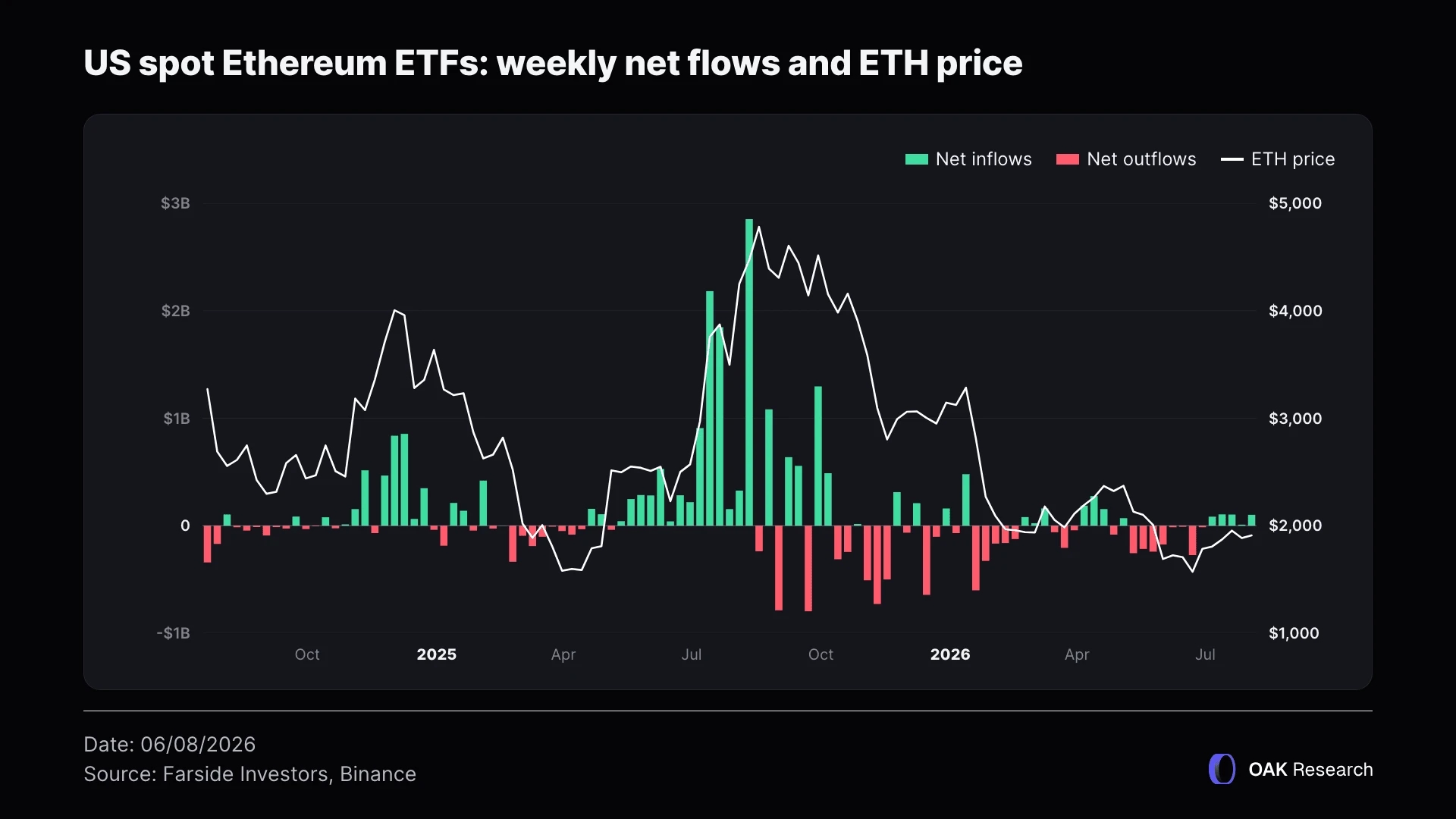
On substance, he adds that waiting for I* simply amounts to abandoning this proposal, whether in its current form or a modified one. Looking at the validator queue, he believes 70 million ETH (against 41.5 million today) could be staked by 1 January 2028 if nothing is done to change the trend.
Faced with the many criticisms the proposal has drawn, Jérôme de Tychey published several detailed responses in order to address, one by one, the main objections raised against EIP-8363.
His first response takes direct aim at the idea that yield would mechanically end up trending toward zero. For him, that reading is mistaken, since zero yield is only reached at the 50% saturation point, a threshold that acts as a stopping mechanism rather than an equilibrium level. In his model, the market stabilises well before that, when the yield simply meets the risk premium demanded by the marginal staker.
Using current ETH lending market rates as a reference, he estimates this equilibrium at around 1.5%, a figure not to be confused with the theoretical floor mentioned earlier: this is not the yield obtained if all ETH were staked, but the level at which the market would naturally stop adding stake.
He also disputes the idea that solo stakers would be the first to leave the network. His reasoning rests on the concept of the wedge, meaning the minimum yield each participant needs in order to keep staking. A delegated staker has to pay the operator, bear additional fees and accept counterparty, governance or smart contract risks.
The solo staker, by contrast, depends on no intermediary, and their break-even threshold is therefore lower. He also draws on the work of Anders Elowsson, which suggests that delegated stakers could be squeezed out before solo stakers as yields fall.
Note: According to the EthStaker 2026 Staking Survey, among respondents willing to name a yield threshold below which they would stop staking, the median sits at around 2%, and has done so consistently across the last three editions. Note that only 72 respondents out of 528 answered this question, and that EthStaker itself advises treating this figure with caution (see part 4).
On the technical choice of a burn rather than a straightforward reduction in issuance, Jérôme de Tychey offers an additional justification: cutting rewards directly would also mean reducing penalties. Over time, rewards and sanctions could disappear simultaneously, removing the economic incentives to validate blocks properly. The burn, by contrast, makes it possible to decouple the two mechanisms, since rewards are still distributed normally while only their economic value is reduced after the fact.
He also responds to the tax risk raised by Stani Kulechov that we mentioned. In his view, the validator never actually receives the gross reward amount, since the deduction takes place within the same state transition, before the funds become withdrawable. He compares this to the current system for offsetting penalties, which is not generally treated as income followed by a separate expense. He does acknowledge, however, that if some jurisdictions were nevertheless to tax that theoretical gross amount, it would indeed constitute an additional cost that would need to be taken into account.
Finally, on the consequences for DeFi, Jérôme de Tychey takes a more personal stance. In his eyes, the current staking yield has become too high for the level of risk actually borne, to the point of stifling many strategies built on unstaked ETH. He is also sceptical of the idea of calibrating issuance in order to preserve looping strategies on LSTs. According to him, the 5 to 8% returns advertised by some of these strategies mainly reflect a perception that the main protocols have become "too big to fail".
Where several critics claim the proposal would penalise independent validators, pintail, who is one himself, argues exactly the opposite: in his view, it is the current issuance curve that will eventually make them economically unviable.
Based in the United Kingdom, he explains that he is taxed at 40% on his staking income. With a 60% staking ratio, he would earn roughly 1.9% in nominal yield, while dilution would already reach 1.2%. Once tax is applied to that nominal yield, he would be left with only around 1.2%, which is exactly the amount lost through dilution. Beyond that threshold, his real yield would turn negative before even accounting for hardware, electricity or the maintenance of his infrastructure.
So in his view, the problem does not lie in falling rewards, but in inflation continuing indefinitely once staking becomes massive.
He also points out that the risks associated with a high staking rate appear well before the maximum threshold comes into view. His first point concerns the growing weight of large staking service providers, which could one day influence the protocol's evolution to the benefit of their own users. The second concerns social slashing: the greater the share of ETH locked up with a handful of players, the harder it becomes, politically as well as economically, to sanction a failing operator, which undermines the very credibility of that threat.
This analysis leads him to completely invert his opponents' argument. In his view, each additional ETH placed in staking no longer improves network security once a certain threshold is passed and, on the contrary, progressively increases centralisation risks while further diluting holders of unstaked ETH. Put differently, additional staking would end up making Ethereum less secure, not more.
Finally, pintail defends the choice of including this reform in Hegotá rather than waiting for a later fork. In his eyes, every additional month sees the staking ratio climb, which will make any future correction more costly and harder to absorb. He does concede, however, that actually crossing 50% before the next major fork remains, in his view, a possible scenario but not the most likely one.
Note: Although this is not a direct stance on this particular EIP, Zach Pandl's paper published last May on Ethereum's staking model echoes the proposal, and certain points, in our view, deserve to be raised here.
In an article published on 12 May, nearly 3 months before EIP-8363 was filed, Zach Pandl was already arguing that Ethereum's staking reward model needed to be revised.
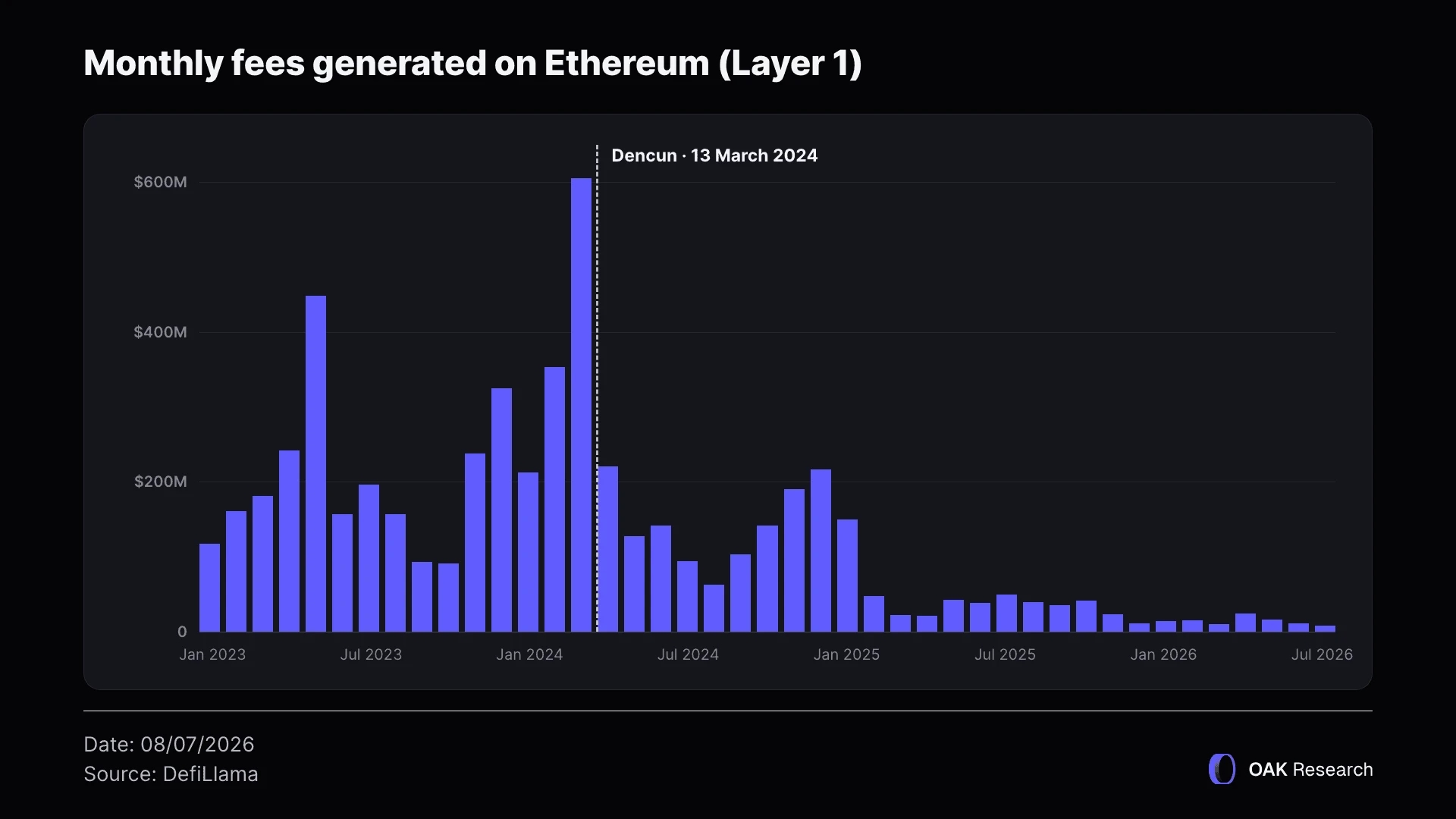
His starting observation is exactly the same as the authors': with activity shifting to Layer 2s, the ETH burn has progressively contracted. Fees generated on the main layer have fallen sharply, reducing the quantity of ETH destroyed accordingly. Since Dencun, net supply has therefore become inflationary again, a trend set to last given that Ethereum has deliberately chosen to prioritise scaling.
He then points out that the friction associated with staking has also largely disappeared. It is worth recalling that, originally, staked ETH could not be withdrawn, which made it illiquid and justified a genuine risk premium. Since withdrawals were enabled, and then with the arrival of ETPs and corporate treasuries staking in turn, the marginal cost of staking has become close to zero. So as long as the network keeps offering even the slightest reward, an ever-larger share of ETH can theoretically end up staked.
In his view, this situation eventually becomes counterproductive, since it needlessly dilutes all ETH holders without genuinely strengthening network security. What is more, an excessively high staking rate mechanically increases the risk of concentration in the hands of a limited number of institutional players.
His analysis also provides an implicit response to the criticisms formulated by Stani Kulechov or Mike Silagadze. Where the latter see staking yield as a central element of Ethereum's value proposition, he argues that ETH should above all be seen as a digital commodity with its own economic utility, rather than as a financial asset comparable to a stock or a bond whose value would rest on its cash flows.
He also compares staking rewards, funded by pure monetary issuance, to a company that pays its shareholders by endlessly printing new shares. Under that model, the advertised yield partly masks the dilution it creates itself. Reducing issuance would therefore reinforce ETH's scarcity, somewhat like a drop in production supporting the price of a commodity.
Finally, he also responds to the argument that a fall in yield would trigger a massive flight of capital. In his view, that effect is largely overstated given that, on an asset whose annual volatility sits close to 60%, a 3% staking yield ultimately represents only about one day of price movement.
Your weekly crypto digest delivered directly to your inbox.
In our view, the question worth asking is this: is ETH issuance as such really Ethereum's problem today? We would say no. It is worth remembering that back when the blockchain still ran on Proof-of-Work, the high inflation of the time never prevented the asset from performing and holding strong appeal for investors.
That said, there is plenty of room between that and claiming the ETH issuance mechanism is perfect. As we noted, this subject has occupied the debate among Ethereum researchers for years, and an issuance curve with no real equilibrium point may well deserve some attention. Where we differ is on the proposed remedy, on its timing, and above all on the hierarchy of priorities it reflects.
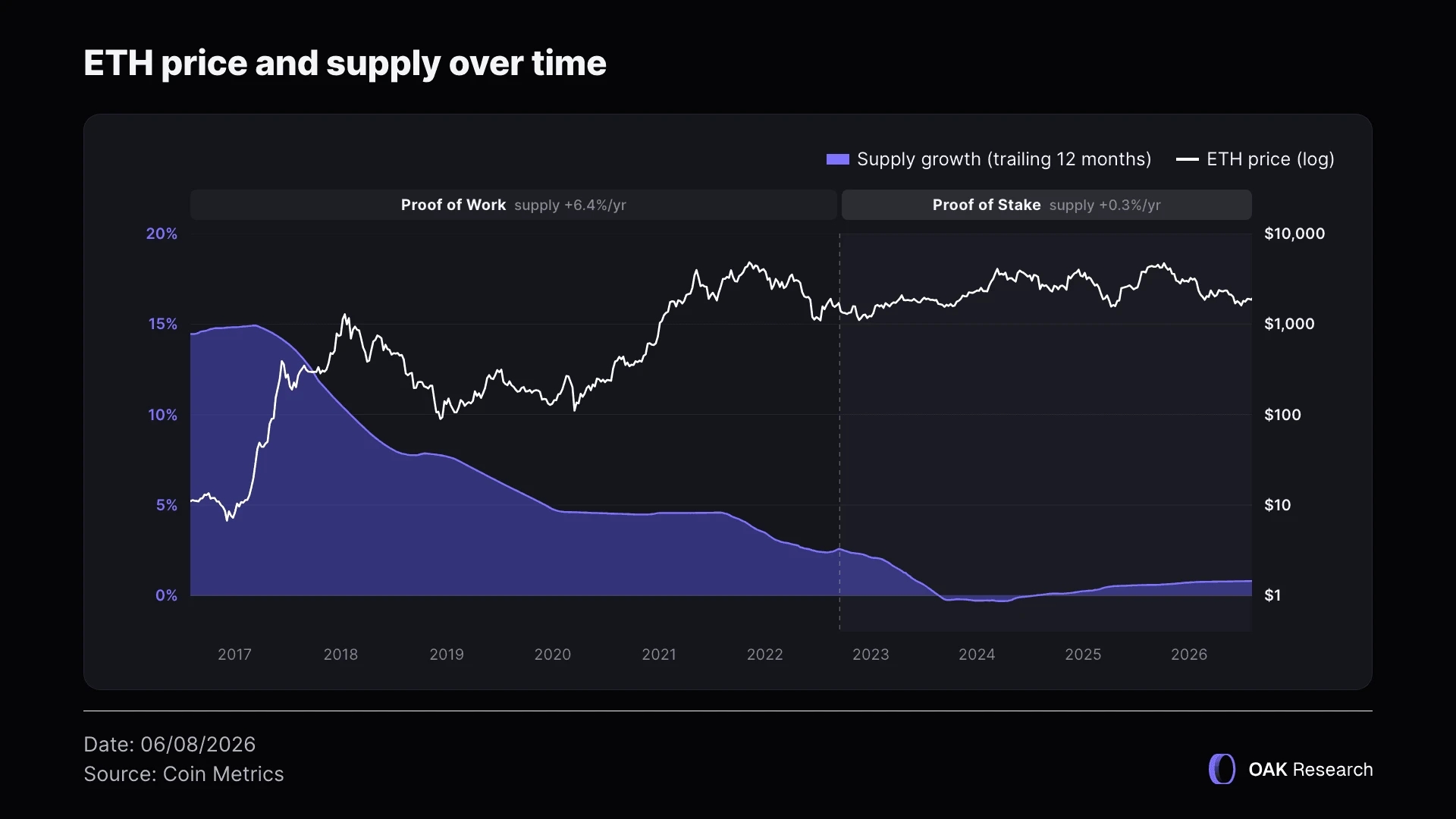
With annual inflation now running at around 0.9%, Ethereum already sits among the least inflationary assets on the market (and incidentally, this is comparable to Bitcoin's annual inflation rate of roughly 0.8%). What supports the value of ETH today is above all demand, whether it comes from its usage, its role as a store of value (a narrative that has, admittedly, been under strain for a while now) or from the yield offered by staking. Optimising a parameter that has become relatively marginal, at the risk of weakening one of the main drivers of that demand, strikes us as a questionable trade-off.
At the same time, this EIP alters the predictability of Ethereum's monetary policy, and that is a point that matters for institutional adoption. Since The Merge, the rule linking the ratio to the yield has not moved, which allows any participant to model a scenario based on their own assumptions.
Here, yield becomes far less predictable, and this is a point Stani Kulechov rightly raised on the forum. Today, being 10% off on the future staking ratio only costs you a 5% error in your yield estimate, because the current curve is very flat. Under the proposed curve, the same error would translate into a 21% error immediately, and up to 42% at 48 million ETH staked. Yet the ratio is precisely the variable nobody manages to anticipate, as shown by its rise from roughly 25% to 32% in 18 months.
On the question of solo stakers, it seems fairly clear to us that the proposal does not work in their favor. A solo staker bears fixed costs, whether hardware, server costs or simply the time devoted to maintaining their infrastructure, not to mention slashing risk. If the yield gets close to zero, all that is left is a cost and a risk, with no adequate compensation to speak of.
This approach also seems to us to sit in tension with another direction championed for several years by Vitalik Buterin: making staking accessible to as many people as possible. Work aimed at progressively lowering the entry threshold or making solo staking easier has precisely the consequence of increasing participation in the network. Seeking afterwards to discourage that increase by artificially compressing yield gives the impression of treating the consequences of a strategy the protocol itself encourages.
We also remain cautious about the coordination argument put forward in relation to hard forks. The EIP's authors believe that an excessively high staking rate would complicate the community's ability to react quickly in an emergency. Yet reducing that ratio does not necessarily change the nature of the players controlling the majority of validators.
Whether 50% or 100% of supply is staked, the main holders will in all likelihood remain the same: Lido and its peers, the large DATs, exchanges and ETF issuers. Ultimately, on this point, the problem therefore has more to do with the concentration of the players involved than with the staking rate itself.
Beyond that, what would concretely happen to liquid staking protocols if yield becomes nil beyond a certain threshold, or at least insufficient? Would they have to unwind part of their own validator sets in order to keep their users within the yield-bearing zone? How would rewards be fairly distributed among depositors when only part of their funds would actually be staked at any given moment? Solutions will certainly emerge, but they will introduce additional complexity into infrastructure that already secures a considerable share of the network, and Ethereum probably does not need that right now.
This shift could also produce another side effect: the potential emergence of a lasting premium on LSTs. If the ability to earn yield becomes too complex a variable, it is not impossible that certain liquid staking tokens would start trading above their theoretical value on the secondary market. While that would probably not be a problem for oracles, it could quickly become one for users of looping strategies, who would see a significant portion of their yield absorbed the moment they buy their LST.
More broadly, it bears repeating that ETH constitutes the base rate of on-chain finance, and the EIP in its current form completely overlooks this point. Lending protocols, leverage strategies, LSTs, LRTs, fixed-rate markets and tokenised treasuries all build their models around that reference. Modifying that rate so profoundly without a proper model of the second-order effects strikes us as premature at the very least.
In the end, our disagreement is less about the diagnosis than about the sequencing of priorities. Before seeking to reduce the yield distributed by the network, Ethereum seems to us to need to resolve a far more fundamental question: rediscovering its purpose, finding a direction again and managing to reclaim its place. That work is already under way, and we covered it in an article recently published on OAK Research. At this stage, this EIP looks more like a brake on ETH's development than anything else.
After going through the EIP proposal, the community discussions, and the overall sentiment around the proposal, we are aligned with the view that this EIP brings more disorder, unpredictability, and confusion than it solves the actual problems Ethereum might have today.
The findings presented in the proposal could be seen as far-fetched and do not take into account the broader implications for the Ethereum ecosystem if this EIP was to be adopted. Ethereum has evolved and is not only limited to what Ethereum Foundation and some researchers believe is right anymore. We believe that if this proposal was brought on the table a few years ago, it could have made more sense and created less pushback. The truth is: Ethereum’s place has evolved. What makes Ethereum useful and valuable today is its DeFi ecosystem, its security and predictability, the diversity of minds that are directly dependent on ETH’s success, and the many organisations supporting its state. Staking is the main component supporting these actors and incentivizing the risk to improve the security of the network.
Our core belief, as stated in the part above, is that the benefits of this proposal are far outweighed by the implication it would have on the broader ecosystem. It is presented as something urgent and that should be included in the next network upgrade, while no clear arguments demonstrate why this is the case and leave little room for discussion and the improvement of the proposal.
Our stance is that solo stakers will be the ones running the biggest risk here while the centralisation increases allowing organisations and institutions to continue staking with marginal costs for their businesses.
Besides, the entry and exit queues for ETH stakers might become chaotic around the 50% staking cap, once again giving the advantage to organisations rather than solo stakers.
Unlock all our research and get the right insights, at the right time.
Bitcoin (BTC), Ethereum (ETH)

Bitcoin (BTC), Ethereum (ETH), Zcash (ZEC)

Bitcoin (BTC), Ethereum (ETH)

Bitcoin (BTC), Ethereum (ETH), Hyperliquid (HYPE), Ethena (ENA)